Safer Indoor AWP Expert-
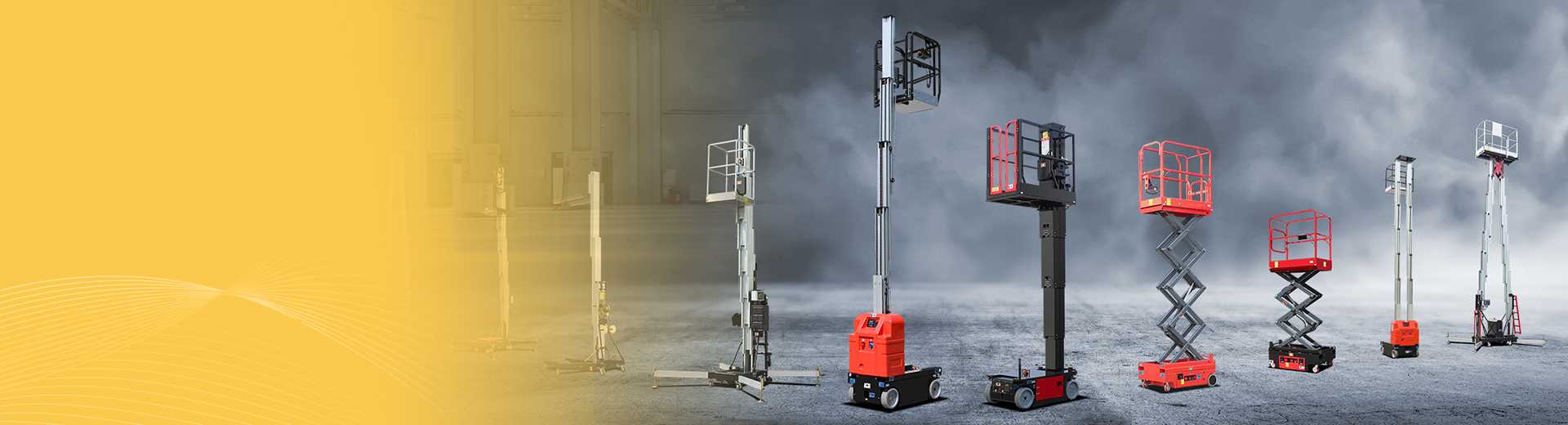
Reeslift Ltd. is a Chinese manufacturer of CE certified aerial working platforms. Our company is located in Feicheng Bianyuan Economic Area, Shandong, China, engaged in Vertical lifts and Scissor Lifts design, production and sales. From the very beginning, we have been dedicated to providing customers with safer indoor aerial working platforms.
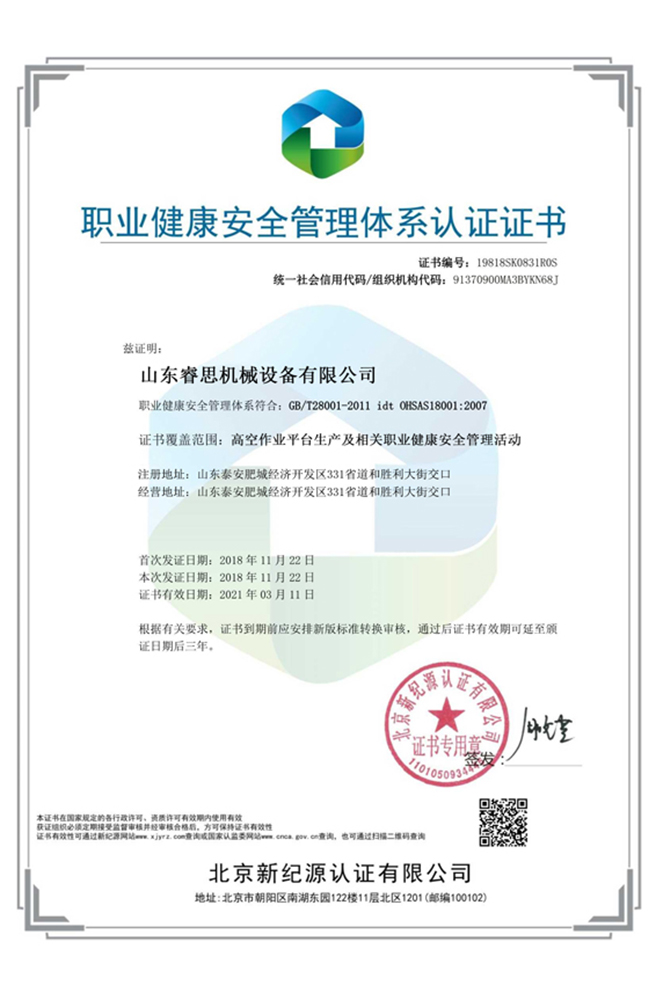
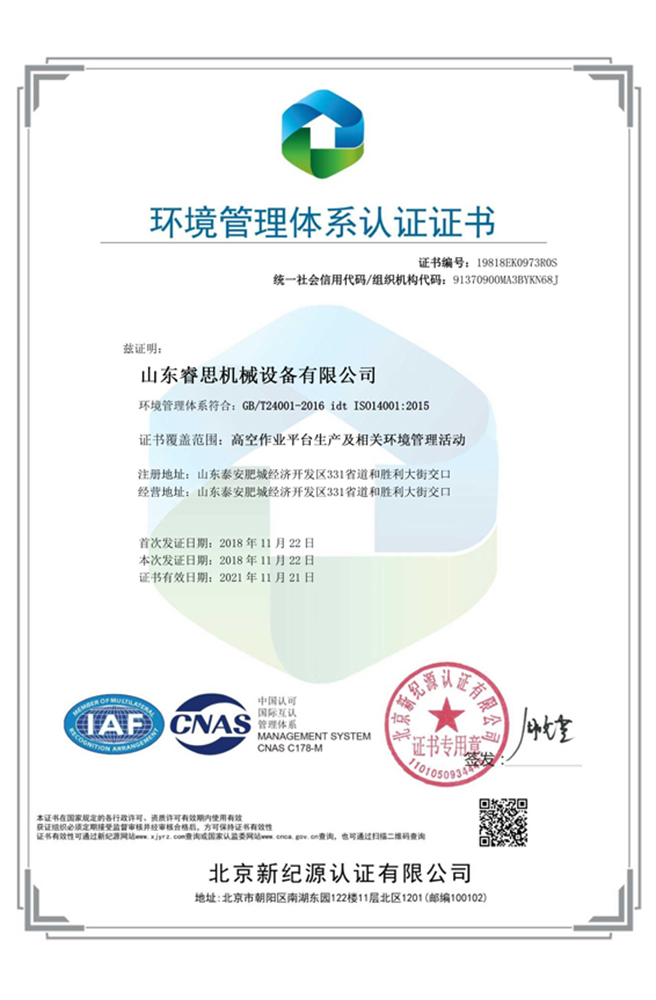
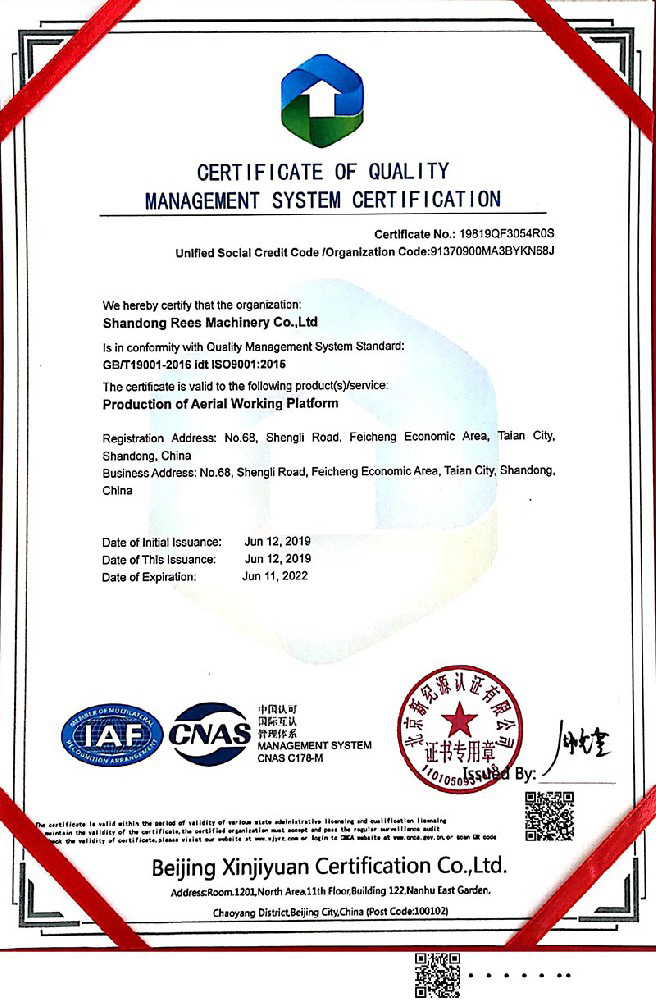
As a professional China manual material lifts manufacturers and manual material lifts factory, relying on years of production experience, REES continuously adopts new technologies, new processes and new materials, implements ISO 9001, ISO 14001 and ISO 18001 standards of international quality management system, international environmental management system, and international health and safety management system, and all its products have passed CE certification in Europe. The technical indicators have reached a high level in the same industry in China, and occupied the market with reasonable prices and good services. They are deeply trusted by the vast number of users. The products are exported to more than 100 countries and regions in Europe, Asia and the United States.
Enterprise establishment
Product Varieties
Product category
Production capacity
Vertical Mast Lift Quick Answers People searching for a vertical mast lift usually arrive with fou...
View MoreThe best team state is one where everyone goes all out for work while also enjoying life with ease a...
View MoreHow REESLIFT is turning AI agents into everyday working tools — across every department — to raise e...
View MoreA facility team needs to change six LED high bays above a racking aisle. The lift has to be under 1...
View MoreA facility manager walks into a warehouse with a simple task: replace three ceiling light fixtures ...
View MoreHow a three-month deadline became a showcase of planning, lean manufacturing, and supply-chain disci...
View MoreA manual material lift is a mechanical device designed to assist in the vertical movement of inventory, tools, and components within industrial settings. Unlike automated systems, these units rely on human-powered mechanisms—such as hand cranks, winches, or hydraulic foot pumps—to generate the lifting force. At REES Industries, we recognize that the primary function of these tools is to provide a reliable, controlled way to elevate heavy loads to ergonomic heights or elevated storage racks. By focusing on precision engineering and robust structural integrity, a manual material lift serves as a dependable bridge between ground-level operations and high-shelf storage, ensuring that your workforce can manage logistics tasks without reliance on external power sources.
Despite the rapid integration of robotics in modern logistics, manual material lifts remain a cornerstone for warehouse operations, assembly lines, and construction environments. Their value lies in their operational reliability and simplicity. In many scenarios, high-cost automated systems are susceptible to power outages, complex software glitches, or high maintenance costs. Conversely, manual solutions offer:
Operational Independence: Your workflow is not dictated by battery life or electrical availability.
Precision Control: Human-operated winches allow for incremental adjustments that are often safer when positioning sensitive or irregularly shaped industrial components.
Reliability: At REES Industries, we adhere strictly to ISO 9001 standards, ensuring that our manual equipment delivers the consistent, mechanical performance required by professional procurement teams. By focusing on core manufacturing quality, we provide a tool that enhances floor efficiency without adding unnecessary complexity to your maintenance schedule.
These units are designed for overhead installation and high-reach material positioning. They utilize a multi-stage telescopic mast system operated via a high-strength cable winch.
Typical Use Case: Installing HVAC components, lighting fixtures, or overhead piping.
These systems utilize a hydraulic pump (operated via foot pedal or handle) to lift loads. They eliminate the need for electricity while providing high-tonnage lifting capabilities.
Technical Advantage: Unlike cable-based systems, hydraulic stackers provide a smooth, consistent lift profile, which is essential for transporting fragile equipment or hazardous materials.
Compact and lightweight, these lifts are designed for rapid mobility. Featuring foldable bases and non-marking casters, they are ideal for maintenance crews moving between different sectors of a factory floor.
Static or mobile lift tables are essential for assembly lines. By keeping components at a constant waist-height level, they minimize operator fatigue and increase throughput in high-volume packing environments.
To help your procurement team make an informed decision based on technical specifications, we have outlined the standard parameters for these core lifting types.
| Feature | Hand-Crank Telescopic | Manual Hydraulic Stacker | Manual Lift Table |
| Lifting Mechanism | Cable & Pulley/Winch | Manual Hydraulic Pump | Scissor Linkage/Pump |
| Primary Use | High-Reach/Overhead | Heavy Load Transport | Ergonomic Assembly |
| Vertical Reach | High (Up to 7m+) | Medium (Up to 3m) | Low (Typically <1.5m) |
| Stability | High (Outriggers often used) | Moderate (Base supports) | Excellent (Broad base) |
| Portability | High (Foldable) | Moderate | Low (If static) |
At REES Industries, our production in Feicheng, Shandong, ensures that every unit—whether a telescopic lift or a hydraulic stacker—is built to the same rigorous CE-certified quality standards. We leverage our deep experience in aerial working platform manufacturing to ensure that all manual lifting mechanisms provide maximum structural rigidity and operator safety, meeting the demands of global clients in over 100 countries.
Manual material lifts offer a significantly lower entry cost compared to fully powered or electric-motorized stackers. By eliminating expensive battery management systems, specialized charging infrastructure, and complex electronic controllers, these units provide a streamlined capital investment. At REES Industries, we focus our engineering resources on high-quality structural steel and precision mechanical linkages, ensuring that the cost-efficiency of our equipment translates into long-term durability for your facility.
The reliability of a manual lift is rooted in its mechanical simplicity. Complex electrical systems in automated equipment often require specialized technicians for repairs, leading to significant downtime. Manual material lifts, by contrast, utilize intuitive, easily serviceable components.
Reduced Downtime: With fewer points of failure, maintenance is typically limited to routine lubrication and cable/seal inspections.
Lower Ownership Costs: The absence of electronic sensors or motor-related components reduces the total cost of ownership (TCO) over the product's lifespan.
Compliance with ISO Standards: Adhering to the ISO 9001 and ISO 14001 standards established at our REES Industries facility in Feicheng, we ensure that every mechanical component is manufactured to facilitate straightforward maintenance and long-term operational integrity.
Modern industrial environments, particularly those adhering to stringent environmental management systems, benefit greatly from the "green" operation of manual equipment.
Zero Emissions: Manual lifts do not produce exhaust, making them perfectly suitable for clean-room environments, pharmaceutical assembly, or food processing areas where air quality is critical.
Silent Operation: The absence of motor noise creates a safer, less distracting work environment, allowing for communication and clear audio signals on the factory floor.
The inherent design of manual material lifts prioritizes space optimization. In facilities where square footage is at a premium, the ability to fold, tuck, or maneuver equipment into tight storage areas is a competitive advantage.
| Performance Metric | Manual Material Lifts | Motorized/Electric Alternatives |
| Operational Energy Source | Human Power (Hand/Foot) | Battery/Grid Electricity |
| Environmental Impact | Zero (No emissions) | Potential Chemical/Electrical Waste |
| Maintenance Complexity | Low (Mechanical focus) | High (Electronics & Software) |
| Operating Noise Level | Near Silent | Variable (Motor hum/Fan noise) |
| Facility Requirements | None (Ready to use) | Charging Stations/Power Grid |
At REES Industries, we design our equipment to balance this high level of flexibility with the rigorous safety requirements demanded by our global client base. Our commitment to CE certification ensures that despite the mechanical simplicity of our manual lifts, they meet the highest European safety benchmarks, providing peace of mind to warehouse managers who require both efficiency and strict regulatory compliance.
When selecting equipment for your facility, the design philosophy behind the manufacturer is as critical as the technical specs of the lift itself. At REES Industries, we apply the same rigorous engineering standards used in our CE-certified aerial working platforms to our manual material handling solutions. Our manufacturing process in the Feicheng Bianyuan Economic Area is governed by strict ISO 9001 and ISO 18001 standards, ensuring that every unit produced is built for maximum structural resilience and long-term reliability.
In the professional industrial sector, performance is measured by stability, lifting capacity, and the precision of the descent. The following table highlights the technical benchmarks that set REES Industries equipment apart in the global market:
| Performance Indicator | Standard Professional Grade | REES Industries Certified Series |
| Material Quality | Structural Steel | High-Tensile Alloy Steel |
| Safety Compliance | Basic Regional Codes | CE Certified / ISO 9001 / ISO 18001 |
| Vertical Lifting Precision | +/- 5mm | High-Precision Mechanical Lock |
| Frame Durability | Standard Coating | Anti-Corrosive Industrial Powder Coat |
| Global Export Standards | Domestic Use Only | Certified for Europe, Asia, and USA |
| Maintenance Accessibility | Standard | Optimized for Rapid Servicing |
The core difference between generic equipment and industrial-grade solutions lies in the "over-engineering" of safety features. At REES Industries, we recognize that manual material lifts are often pushed to their limit in fast-paced warehouse environments. Therefore, we utilize new technologies and advanced manufacturing processes to ensure that our scissor and vertical lift configurations offer superior load-bearing stability.
Manufacturing Integrity: By integrating new materials and production methods, we reduce frame flex, even when handling maximum rated loads at full vertical extension.
Safety Assurance: With our products exported to over 100 countries and regions, our designs are tested against diverse regulatory frameworks. This global presence confirms that our manual lifts are not only effective in theory but have been proven under the actual, demanding conditions of diverse industrial sites in Europe, Asia, and the United States.
Reliability for Procurement: When you choose REES Industries, you are acquiring equipment backed by a comprehensive management system that prioritizes worker health and safety, ensuring that your procurement decisions support both immediate productivity and long-term risk mitigation.
Determining the correct load capacity is the most critical step in your procurement process. You must evaluate not only the average weight of your materials but also the peak weight of the heaviest items handled in your facility. At REES Industries, we design our lifts to maintain structural integrity at their maximum rated load. When evaluating your needs, ensure the lift capacity provides a safety margin above your typical operational requirements to extend the equipment's service life and enhance stability during high-reach maneuvers.
Your facility's ceiling height and the requirements of your racking systems dictate the necessary vertical reach. It is essential to distinguish between the "lowered height" (for transport through doorways) and the "maximum lifting height" (for material placement). Our engineering team at REES Industries focuses on optimizing the mast design to offer the best ratio between a compact retracted profile and maximum extension, ensuring that your lift remains versatile enough for both indoor floor transport and high-level storage tasks.
In busy warehouse environments, efficiency is tied to how quickly equipment can be cleared from the floor when not in use. A foldable design is often preferred for teams that must transport lifts between different sections of the factory or multiple job sites. Our models are engineered for ease of movement, featuring high-quality, non-marking casters that protect your flooring while ensuring the lift can be maneuvered through standard industrial pathways.
The utility of a manual material lift is significantly enhanced by its ability to interface with various load types. Procurement teams should look for modular designs that allow for easy swapping of attachments.
| Feature | Importance for Operations | REES Industries Integration |
| Standard Forks | Essential for palletized cargo | Reinforced high-tensile steel |
| Boom Attachments | Ideal for lifting loose parts/motors | Designed for precise center-of-gravity |
| Platform Scales | Critical for inventory management | Integrated weight-monitoring support |
| Quick-Change Systems | Minimizes equipment downtime | Tool-less swap capabilities |
To assist your decision-making, consider the following parameters when comparing options:
Environmental Compatibility: Does the lift meet your site’s specific certification needs (e.g., ISO 14001 compliance for environmental management)?
Safety Standards: Does the equipment carry international certifications like the CE mark, indicating it has passed rigorous safety testing?
Serviceability: Can the maintenance team perform standard checks and part replacements without requiring proprietary electronics?
Safety begins before the lift is ever engaged. A systematic inspection routine is the most effective way to prevent accidents and extend the operational life of your equipment. At REES Industries, we advise all site managers to establish a daily, documented checklist that adheres to the international health and safety management systems we implement in our own manufacturing facility.
Cables and Winches: Check for any fraying, kinks, or signs of wear in the lifting cables. The winch mechanism should operate smoothly without binding.
Hydraulic Systems: If using a hydraulic stacker, inspect all seals and hoses for leaks. Ensure the hydraulic fluid level is consistent with the manufacturer's technical manual.
Structural Integrity: Verify that all bolts and fasteners are secure and that the mast sections are free from obstructions or debris.
Maintaining the center of gravity is paramount when operating a manual material lift. Improper loading can lead to instability, especially when the mast is fully extended.
Centering the Load: Always ensure the weight is centered on the forks or platform. Off-center loads can create excessive lateral stress on the mast.
Load Rating Adherence: Never exceed the maximum rated lifting capacity. REES Industries designs its lifting systems with precise safety factors, but these are intended to manage operational variables, not to compensate for overloading.
Surface Stability: Always operate the lift on firm, level surfaces. Avoid inclines or uneven floor plates which can drastically alter the stability profile of the equipment.
Operating a manual material lift requires an environment where safety is clearly prioritized.
Personal Protective Equipment (PPE): Operators should wear steel-toed footwear, high-visibility vests, and hard hats, particularly when moving materials to elevated positions.
Work Zone Management: Maintain a clear work zone around the lift. No unauthorized personnel should be permitted beneath a raised load.
Operator Training: All staff must be trained on the specific mechanics of the lift they are operating. REES Industries provides comprehensive technical documentation to assist in training personnel on the safe use and maintenance of our CE-certified platforms.
| Safety Parameter | Best Practice | Risk of Neglect |
| Inspection Interval | Pre-Shift (Every Day) | Increased component failure |
| Load Positioning | Centered & Stable | Tipping / Loss of load |
| Operating Surface | Clean & Level | Stability compromise |
| Maintenance Records | Mandatory Logging | Voided warranty / Safety oversight |
By following these protocols, your facility can maintain a safe environment that protects both your employees and your high-value inventory. At REES Industries, we believe that superior design—backed by our ISO-certified manufacturing processes in Feicheng—is only one part of the equation; rigorous adherence to safety protocols is what ensures that every manual material lift remains a productive and reliable asset for your business.
To ensure procurement professionals and facility managers have the technical clarity needed to integrate manual material lifts into their workflows, we have compiled the following answers to the most common inquiries. At REES Industries, our commitment to quality and transparency ensures that you have the data necessary to make informed decisions for your material handling needs.
What is the maximum lifting capacity typically found in standard manual material lifts?
Standard manual units generally range from 100kg to 1,000kg depending on the configuration. For heavy-duty industrial needs, REES Industries provides robust configurations capable of handling substantial loads while maintaining strict adherence to safety standards.
Are manual hydraulic stackers suitable for uneven flooring surfaces?
Manual stackers are designed primarily for smooth, concrete warehouse floors. Operating on uneven surfaces can create significant stability risks. We recommend ensuring your facility floor meets standard industrial flatness specifications before deployment.
How often should the winch or cable system on a telescopic manual material lift be inspected?
For active industrial use, a visual inspection should occur before every shift. A comprehensive, documented maintenance check—including lubrication and tension testing—should be conducted at least monthly, in line with international health and safety management systems like the ISO 18001 standards we follow at REES Industries.
Can manual material lifts be fitted with specialized attachments for non-standard loads?
Yes. Many professional-grade lifts feature modular carriage designs. At REES Industries, we can discuss specific requirements for custom forks, booms, or platforms to ensure your lift safely interfaces with your unique product dimensions.
What are the primary differences between a manual stacker and a manual lift table?
A manual stacker is designed for vertical transport and racking (high-lift functionality), while a manual lift table is designed for ergonomic positioning (waist-height tasks) to reduce operator fatigue during assembly or packing.
Are there specific certifications or standards required for operating manual material lifts in a setting?
In most international markets, CE certification is the benchmark for safety and quality. All REES Industries products are CE certified, ensuring they meet rigorous European requirements for health, safety, and environmental protection.
How do you determine the correct height capacity for your facility's ceiling clearance?
Calculate your highest racking beam level and add a minimum 30-50cm buffer for safe load clearance. Always verify the "mast height when fully retracted" to ensure the lift can pass through your lowest doorways.
What maintenance tasks are required for manual hydraulic components?
Primary tasks include monitoring hydraulic fluid levels, inspecting cylinders for leaks, and ensuring the pump handle mechanism remains lubricated and responsive.
Can manual material lifts be used in outdoor construction environments?
While some models are designed for durability, they are intended for use on stable, level ground. Outdoor use requires caution regarding wind loads and terrain stability.
What measures should be taken to ensure load stability when using a hand-crank system?
Always engage the mechanical brake during the lifting process. Ensure the load is evenly distributed and never attempt to "jerk" the crank; a slow, steady motion is best for maintaining control.

Address: No.68, Shengli Road,Feicheng Bianyuan Economic Area,Taian,Shandong,China
Phone: +86-18920287918
E-mail: [email protected]



 Español
 中文简体