HOME / PRODUCTS / SELF PROPELLED VERTICAL LIFTS / Single Mast Vertical Lifts

Single Mast Vertical Lifts Custom

about REES lift

Reeslift Ltd.

Reeslift Ltd.

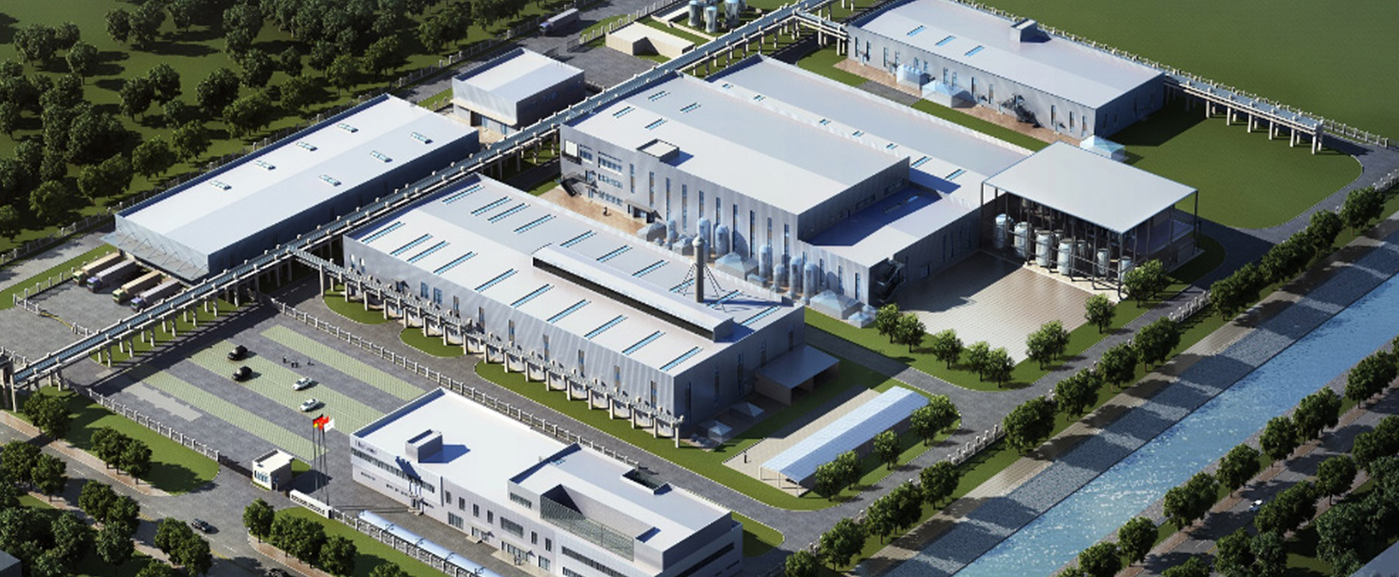
Safer Indoor AWP Expert- Reeslift Ltd. is a Chinese manufacturer of CE certified aerial working platforms. Our company is located in Feicheng Bianyuan Economic Area, Shandong, China, engaged in Vertical lifts and Scissor Lifts design, production and sales. From the very beginning, we have been dedicated to providing customers with safer indoor aerial working platforms.
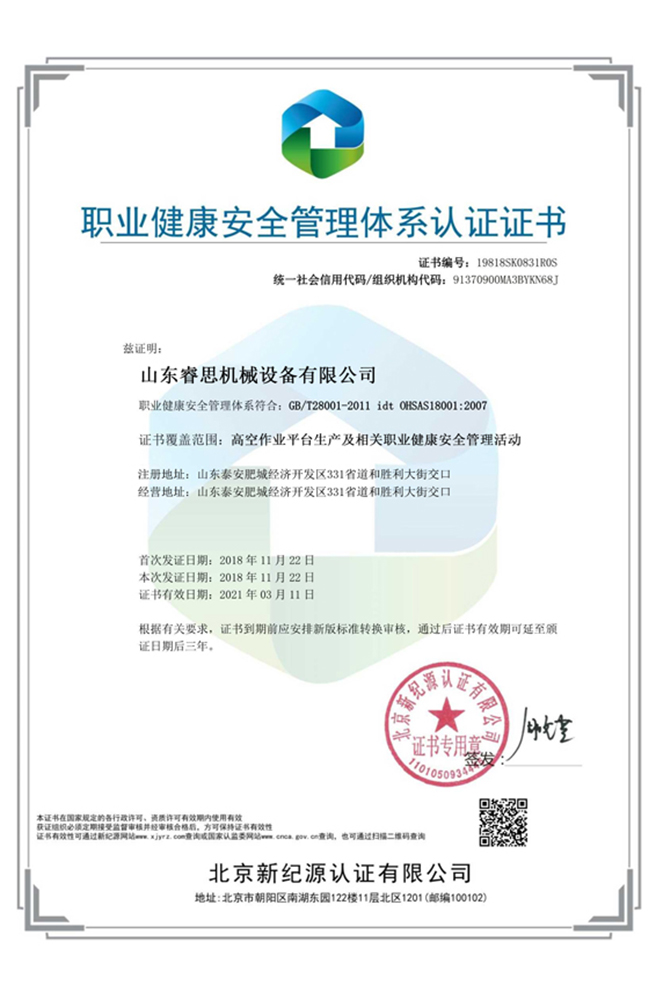
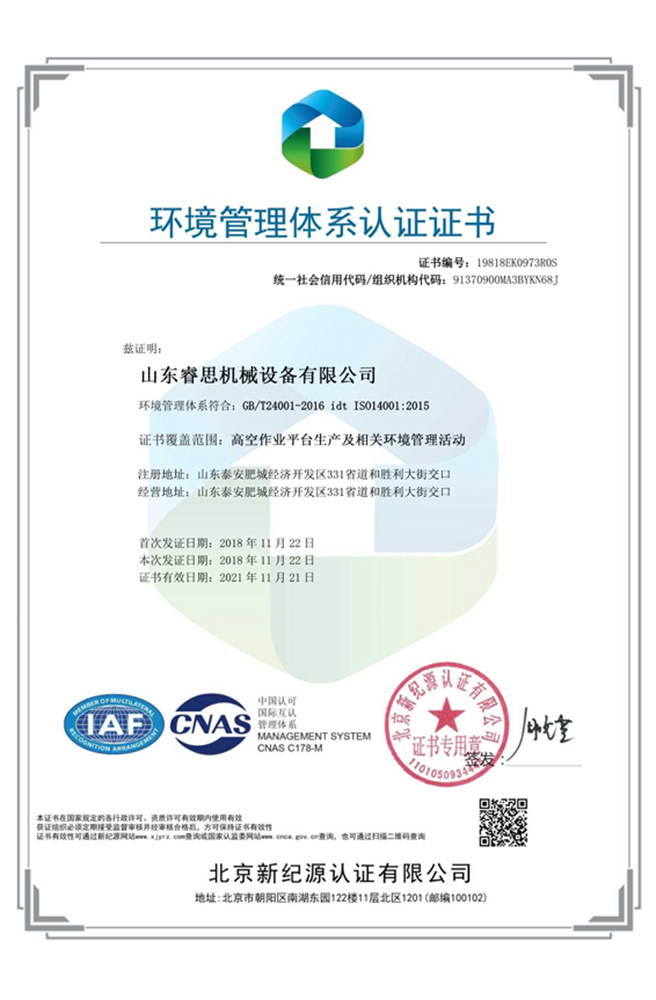
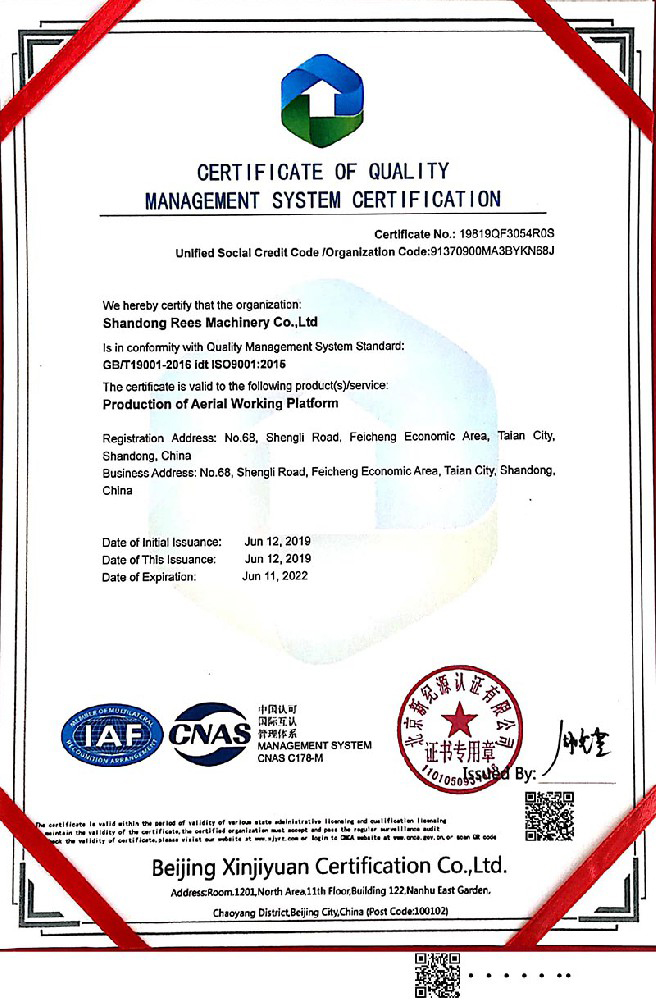
As a professional China single mast vertical lifts manufacturers and single man lifts factory, relying on years of production experience, REES continuously adopts new technologies, new processes and new materials, implements ISO 9001, ISO 14001 and ISO 18001 standards of international quality management system, international environmental management system, and international health and safety management system, and all its products have passed CE certification in Europe. The technical indicators have reached a high level in the same industry in China, and occupied the market with reasonable prices and good services. They are deeply trusted by the vast number of users. The products are exported to more than 100 countries and regions in Europe, Asia and the United States.

  • 0

    Enterprise establishment

  • 0+

    Product Varieties

  • 0+

    Product category

  • 0

    Production capacity

Honor

  • honor
  • honor
  • honor

News

Industry Knowledge Expansion

Understanding Single Mast Vertical Lifts: Essential Specifications and Applications

Defining Single Mast Vertical Lifts in Modern Operations:

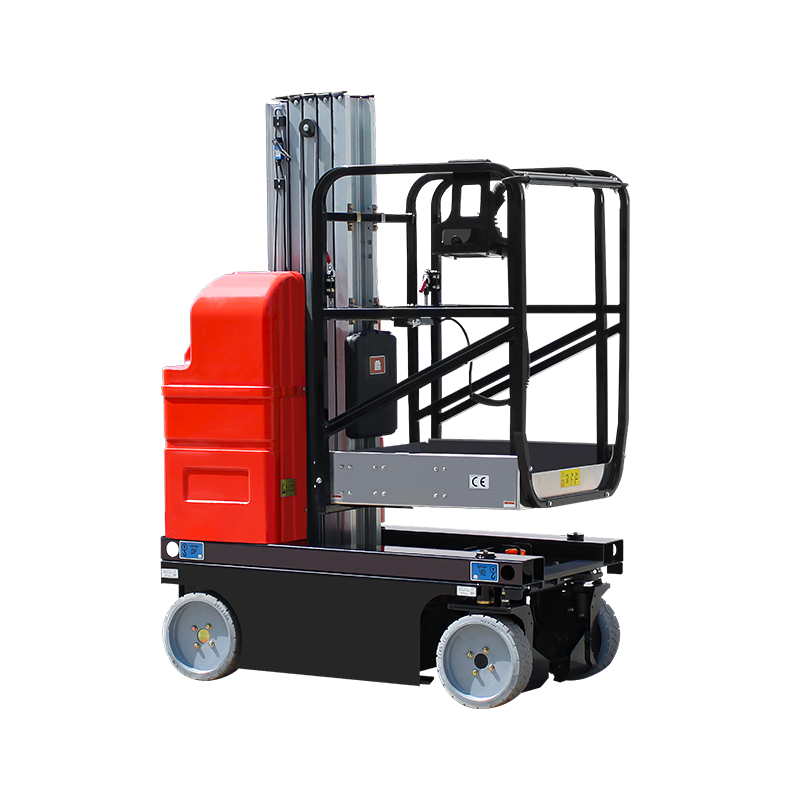
Single Mast Vertical Lifts, often referred to as personnel lifts, are specialized aerial work platforms engineered for high-precision, vertical-only access in confined environments. Unlike boom lifts or large-scale scaffolding, these units utilize a single vertical mast system to elevate an operator to required heights, providing a stable, upright, and efficient solution for tasks that demand vertical positioning.

In facility maintenance, warehousing, and construction, these lifts have become indispensable for maximizing operational efficiency. As a Safer Indoor AWP Expert-REES Industries, we recognize that modern industrial sites require more than just vertical reach; they require equipment that integrates seamlessly into existing workflows without compromising floor integrity or worker safety. Located in the Feicheng Bianyuan Economic Area, Shandong, China, REES Industries focuses on the design, production, and sales of vertical lifts and scissor lifts that meet the rigorous demands of global procurement.

Our commitment to safety is foundational. By implementing ISO 9001, ISO 14001, and ISO 18001 management systems, REES Industries ensures that every unit—from the initial design phase to final assembly—adheres to strict international quality, environmental, and occupational health standards. All our products are CE certified, ensuring they meet the high safety thresholds required for export to the European, Asian, and United States markets.

Technical Comparison: Single Mast Vertical Lifts vs. Traditional Alternatives

To assist facility managers and procurement professionals in selecting the right equipment, the following table compares the operational characteristics of Single Mast Vertical Lifts against traditional manual access methods:

Feature Single Mast Vertical Lifts Traditional Scaffolding Portable Ladders
Operational Efficiency High (Rapid vertical deployment) Low (Slow assembly/disassembly) Moderate (Limited reach)
Operator Safety High (Integrated guardrails/sensors) Moderate (Fall risk during assembly) Low (Instability risk)
Footprint Extremely Compact Large/Fixed Minimal
Mobility High (Self-propelled or push-around) Stationary Manual handling
Floor Protection High (Designed for indoor surfaces) Variable (Risk of impact damage) Moderate
Load Capacity Consistent/Defined Variable Limited to one person

REES Industries has leveraged years of production experience to refine these technical indicators, ensuring our lifts perform at a high level within the industry. By continuously adopting new technologies and materials, we provide professional-grade access equipment that has earned the trust of users in over 100 countries and regions. Whether for routine electrical maintenance or high-bay warehouse operations, our single mast designs prioritize both the safety of the operator and the commercial value of the asset, offering a superior alternative to traditional manual access solutions.

Core Engineering and Key Features of Single Mast Vertical Lifts

The efficiency of a Single Mast Vertical Lift is fundamentally defined by its engineering precision. As a Safer Indoor AWP Expert-REES Industries, we focus on balancing structural rigidity with a lightweight profile. Our vertical mast designs utilize high-strength extruded aluminum or reinforced steel profiles, which are subjected to rigorous testing to ensure stability at maximum extension. By adhering to international quality management standards, REES Industries ensures that the mast mechanism maintains minimal sway, providing operators with a secure and stable platform necessary for detailed overhead work.

Compact Footprint and Maneuverability

Space is a premium resource in warehouses and manufacturing facilities. Our engineering philosophy at REES Industries prioritizes a compact footprint, allowing these units to navigate narrow aisles, transit through standard single doorways, and maneuver in congested work zones without disrupting ongoing facility operations.

Lightweight Design for Sensitive Flooring

Protecting industrial floor finishes, such as epoxy coatings or polished concrete, is a critical requirement. Our lifts are designed with non-marking casters and an optimized center of gravity, significantly reducing ground pressure. This allows REES Industries equipment to operate on delicate surfaces where heavier access machinery would be prohibited.

Power Configurations: AC vs. DC

Understanding the operational environment is key to selecting the appropriate power source. Below is a technical comparison of the two primary power systems offered in our product range:

Feature AC Power (Plug-in) DC Battery Power (Rechargeable)
Operational Time Unlimited (Constant supply) Limited (Cycle-dependent)
Mobility Restricted by cord length Unlimited (Fully mobile)
Weight Lighter (No heavy battery pack) Heavier (Due to battery weight)
Indoor Suitability Excellent for fixed-site tasks Excellent for dynamic, multi-zone tasks
Maintenance Minimal (No battery care) Regular (Charging/Watering)

Technical Parameters: Height and Capacity

REES Industries emphasizes strict compliance with certified load-bearing and height limitations. Our engineering team meticulously calibrates the hydraulic systems to ensure consistent performance throughout the lift's lifecycle.

Working Height Limits: Each unit is engineered to provide precise reach, with safety interlocks preventing operation beyond the rated threshold.

Platform Weight Capacity: We design our platforms to accommodate the operator plus necessary tools, ensuring that the rated capacity is maintained without compromising the structural integrity of the mast.

Classification of Single Mast Lifting Equipment

The selection of a vertical access solution depends heavily on the specific operational requirements of the facility. At REES Industries, we categorize our equipment based on how the unit is moved and positioned, ensuring that procurement professionals can select a system that aligns with their site-specific workflows. Whether the task requires constant, stationary maintenance or dynamic movement across a warehouse floor, our range is designed to provide the necessary flexibility and stability.

Push-Around Vertical Lifts

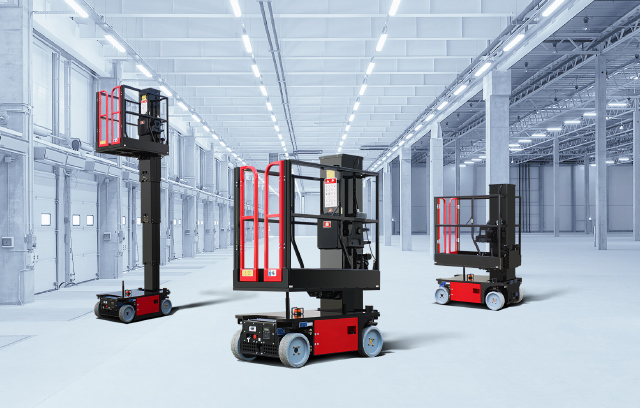
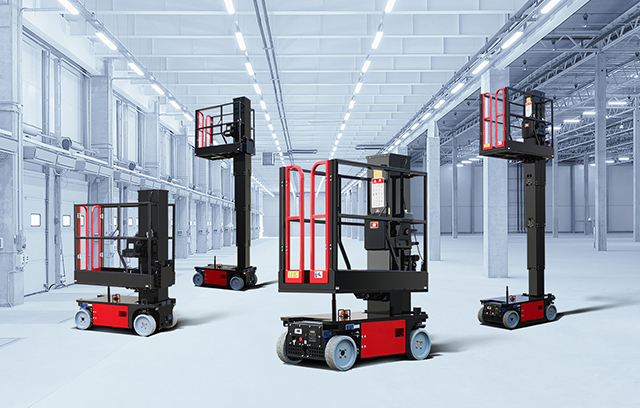
Push-around lifts are manually propelled, making them an ideal choice for high-frequency, localized maintenance tasks. These units are valued for their simplicity and ease of use. Because they lack a motorized drive system, they are lighter in weight and have a smaller overall footprint, allowing for effortless manual repositioning within small work zones or tight maintenance corridors. REES Industries designs these models with a focus on ease of deployment, ensuring that operators can set up quickly for tasks like lighting repairs, ceiling maintenance, or inventory management in confined spaces.

Self-Propelled Stock Pickers and Mast Lifts

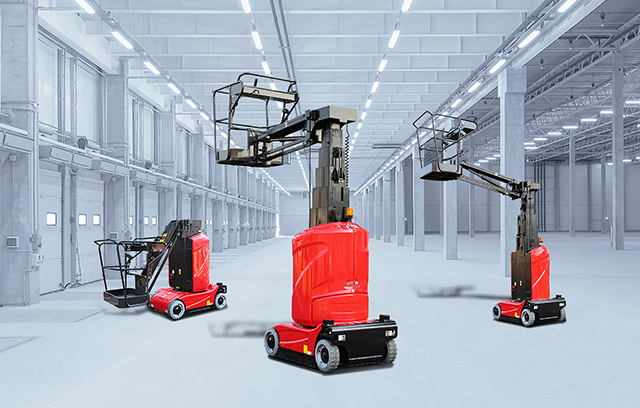
Self-propelled models are engineered for efficiency in dynamic environments where the operator needs to move frequently between multiple locations. These units feature integrated drive systems that allow the operator to travel and lift simultaneously, significantly reducing the time spent on manual repositioning. REES Industries integrates advanced control interfaces into these lifts, ensuring precise navigation while the platform is elevated. This capability is essential for operations that demand consistent movement along shelving units or across large manufacturing shop floors.

Comparison of Classification Parameters

The following table provides a technical comparison to help differentiate the performance characteristics of these two classifications:

Feature Push-Around Vertical Lifts Self-Propelled Mast Lifts
Mobility Method Manual (Human-powered) Motorized (Drive system)
Operational Tempo Static/Localized Maintenance Dynamic/High-frequency Movement
Setup Speed Fast (Manual positioning) Instant (Driving to location)
Weight Lightweight for easy manual handling Heavier (Due to drive components)
Complexity Low (Minimal electronic sensors) Higher (Requires complex controllers)
Operator Efficiency High for single-point tasks High for multi-point tasks

Operational Benefits and Strategic Advantages

The integration of professional-grade vertical access equipment into your facility infrastructure provides measurable improvements in productivity and safety. As a specialist in aerial work platforms located in the Feicheng Bianyuan Economic Area, REES Industries has observed that the transition from traditional access methods to a modern single mast lift system creates a distinct operational advantage. By utilizing equipment designed for industrial precision, facility managers can optimize their maintenance and logistics cycles while mitigating common workplace hazards.

Enhanced Operator Safety

Compared to traditional ladders, which lack integrated fall protection, or scaffolding, which introduces risks during assembly and disassembly, our single mast lifts offer a significantly higher safety profile. REES Industries equips these units with robust guardrails, emergency descent systems, and stable base platforms. These safety features ensure that operators remain secure even when working at maximum heights, effectively reducing the physical fatigue and injury risks associated with manual climbing.

Cost-Efficiency and Maximized Uptime

Efficiency is built into the design of our equipment through the use of high-quality components and logical, user-friendly control systems. REES Industries focuses on low-maintenance engineering—by minimizing complex, proprietary electronics and utilizing durable, standard-compliant hydraulic assemblies, we ensure that our lifts remain operational with minimal intervention. This focus on reliability translates into high equipment uptime, allowing your team to complete critical maintenance and inventory tasks without the delays caused by equipment downtime.

Logistical Advantages: Transport, Loading, and Storage

The compact nature of our vertical lifts addresses the challenge of limited space in modern warehouses and industrial facilities. Their streamlined design allows for easy loading onto transport vehicles, while their vertical mast configuration ensures they occupy a minimal footprint when stored.

Performance Comparison: Traditional Access vs. REES Industries Lifts

The following table highlights the operational improvements achieved by transitioning to a modern, professional-grade lift:

Metric Traditional Ladders/Scaffolding REES Industries Vertical Lifts
Setup Time High (Requires manual assembly) Minimal (Ready to use)
Worker Fatigue Significant Minimal (Ergonomic operation)
Stability at Height Subject to structural vibration Engineered for maximum rigidity
Storage Requirements Large/Bulky Compact/Space-saving
Compliance Readiness Requires complex safety documentation Built-in CE compliant safety systems
Maintenance Burden High (Visual inspection of every joint) Low (Periodic hydraulic/battery checks)

Industry-Standard Models for Industrial Procurement

Selecting the appropriate equipment requires an understanding of how specific design configurations meet the varying demands of facility maintenance and logistics. At REES Industries, our production philosophy centers on delivering standardized, high-performance aerial working platforms that cater to diverse international requirements. By focusing on consistent engineering principles, we ensure that every unit produced at our facility in the Feicheng Bianyuan Economic Area provides the reliability required for critical operations.

Technical Specifications by Series Classification

To assist in the selection process, we have categorized our primary models based on their operational capacity and structural configuration. These technical parameters are designed to provide clear guidance for procurement decisions:

Model Series Propulsion Type Primary Application Max Working Height Range Load Capacity
P-Series Push-Around Localized Maintenance 6m – 12m 125kg – 150kg
S-Series Self-Propelled Stock Picking / Movement 8m – 14m 150kg – 200kg
H-Series Self-Propelled High-Bay / Heavy-Duty 10m – 16m 200kg – 250kg

P-Series (Push-Around): Optimized for indoor settings where space is highly constrained. These units emphasize extreme mobility and a compact design, perfect for facilities requiring frequent access to ceiling-mounted equipment or high-bay lighting.

S-Series (Self-Propelled): Engineered for facilities requiring dynamic movement. These models allow for automated travel while the platform is elevated, significantly increasing efficiency in warehouse environments.

H-Series (High-Capacity): Designed for tasks requiring additional tools or materials to be elevated simultaneously. These models maintain the same strict safety standards as our other lines but feature reinforced mast structures to support heavier platform loads.

Engineering Excellence and Global Compliance

Every unit manufactured by REES Industries undergoes a rigorous quality control process to ensure performance consistency. Because our equipment is exported to over 100 countries, we prioritize features that align with diverse international safety regulations, specifically the CE certification requirements for the European market.

We avoid the use of complex, non-standard components in favor of high-quality, durable assemblies that are easy to inspect and maintain. This approach ensures that when you choose a REES Industries model, you are investing in a system that offers predictable performance, high stability, and long-term compliance with health and safety standards.

Critical Selection Criteria for Facility Managers

Selecting the ideal vertical access equipment is a strategic decision that directly impacts facility maintenance, productivity, and safety compliance. As a dedicated manufacturer, REES Industries provides professional guidance to ensure that every unit integrated into your facility matches your specific operational profile.

Reach and Outreach Requirements

Before selecting a model, it is vital to distinguish between platform height and working height. Working height generally includes the platform height plus approximately two meters of reach for an average operator. REES Industries recommends identifying the highest access point in your facility to ensure the chosen mast configuration provides sufficient reach without operating at the absolute limit of the hydraulic system, which optimizes the stability of the platform.

Ground Conditions and Environmental Safety

Not all surfaces are designed to support heavy machinery. Our lifts are engineered to be lightweight, yet it is essential to verify the point load capacity of your facility’s flooring—particularly for mezzanines or raised platforms. REES Industries provides detailed load-distribution data for each of our models, ensuring that our equipment can be safely operated on sensitive finishes without causing structural impact or surface damage.

Infrastructure Constraints

The effectiveness of a lift is often limited by its physical dimensions. We suggest a thorough audit of your facility’s access points, specifically doorway width and height, and elevator compatibility for multi-story facilities.

Technical Selection Checklist

The following table outlines key constraints that should be evaluated to ensure a proper fit between the equipment and your facility:

Evaluation Factor Critical Technical Requirement REES Industries Design Focus
Operational Height Max reach vs. Clearance constraints Optimized mast sections for indoor use
Surface Loading Max psi (pressure per square inch) Lightweight design to protect flooring
Entry/Exit Narrowest doorway/hallway width Streamlined chassis for easy passage
Power Supply Availability of charging infrastructure Dual-power options (AC/DC) available
Environment Indoor vs. Outdoor safety rating CE-certified stability for indoor duty

Regulatory Compliance and Operational Integrity

Maintaining high safety standards is the cornerstone of professional facility management. At REES Industries, we believe that the engineering of an aerial working platform is only as good as the safety protocols that govern its use. By adhering to the ISO 9001, ISO 14001, and ISO 18001 management systems, we ensure that our manufacturing process supports your facility's commitment to occupational health and safety.

Adherence to Safety Standards

Vertical lift operation is subject to strict regional and international guidelines. REES Industries provides comprehensive technical manuals with every unit, ensuring your team has the necessary documentation to satisfy local safety inspectors and internal auditors.

Mandatory Pre-Operation Inspection Protocols

Safety starts before the lift is even powered on. Every REES Industries lift is equipped with intuitive control interfaces that include built-in self-diagnostics. Operators are trained to follow a systematic checklist to verify that the hydraulic systems, limit switches, and emergency stops are in perfect working order.

Safety and Compliance Comparison

The following table details the core safety requirements that facility managers must prioritize to ensure full operational compliance:

Inspection/Compliance Area Requirement Focus REES Industries Contribution
Mechanical Integrity Structural mast and base stability CE-certified load-bearing designs
Control System Emergency stop and descent reliability Standardized, high-response hydraulics
Operator Training Documented competency in operation Comprehensive safety/technical manuals
Environmental Safety Compliance with site-specific hazards ISO 14001 environmental management
Periodic Maintenance Scheduled inspection of wear parts Simplified design for easy, visual audit

Frequently Asked Questions (FAQ) for Procurement

To assist facility managers and procurement teams in making informed decisions, REES Industries has compiled answers to the most common technical inquiries regarding our Single Mast Vertical Lifts.

What is the standard maintenance interval for a Single Mast Vertical Lift?

We recommend a visual inspection before every shift and a comprehensive technical inspection every 90 days. Because REES Industries designs these lifts for simplicity, most routine maintenance can be performed by your on-site maintenance team.

Can these lifts be operated on inclined surfaces?

Our vertical lifts are engineered for operation on firm, level surfaces. Always refer to the technical manual provided by REES Industries for the specific grade-ability and tilt-alarm limitations of your model.

How do I ensure compliance with local electrical standards for charging stations?

Our DC battery-powered units are equipped with universal charging systems. Users should ensure their facility’s power supply matches the voltage requirements specified in the equipment documentation.

Are there specific weight distribution requirements for sensitive mezzanines?

Yes. REES Industries provides detailed ground-pressure data for all models. When operating on raised flooring or mezzanines, ensure the combined weight does not exceed the floor’s rated load capacity.

What are the primary differences in platform stability between push-around and self-propelled models?

While both are highly stable, self-propelled units feature a slightly wider chassis, providing additional stability during elevated movement. Push-around models offer a smaller footprint, ideal for stationary work in very tight areas.

Do these lifts require specialized annual safety inspections?

Many regions mandate an annual thorough examination by a certified technician. REES Industries provides the necessary documentation and technical support to assist your facility in fulfilling these requirements.

How is the "working height" calculated versus the "platform height"?

Platform height is the maximum elevation of the floor of the lift. Working height is defined as the platform height plus two meters. All REES Industries technical datasheets clearly define both figures.

What is the recommended storage temperature for the hydraulic and battery systems?

To maintain optimal performance, store your lifts in a dry, temperate environment between 5°C and 40°C.

Are there specific training certificates required for warehouse personnel to operate these units?

Operational requirements vary by jurisdiction. In most regions, operators must be trained and certified. REES Industries strongly advises that all personnel review our provided technical and safety manuals prior to operation.

How does the mast design impact visibility during elevated operations?

REES Industries utilizes a high-strength, slim-profile mast design. This architecture maximizes the operator's field of vision, allowing for precise positioning and enhanced situational awareness.