Safer Indoor AWP Expert-
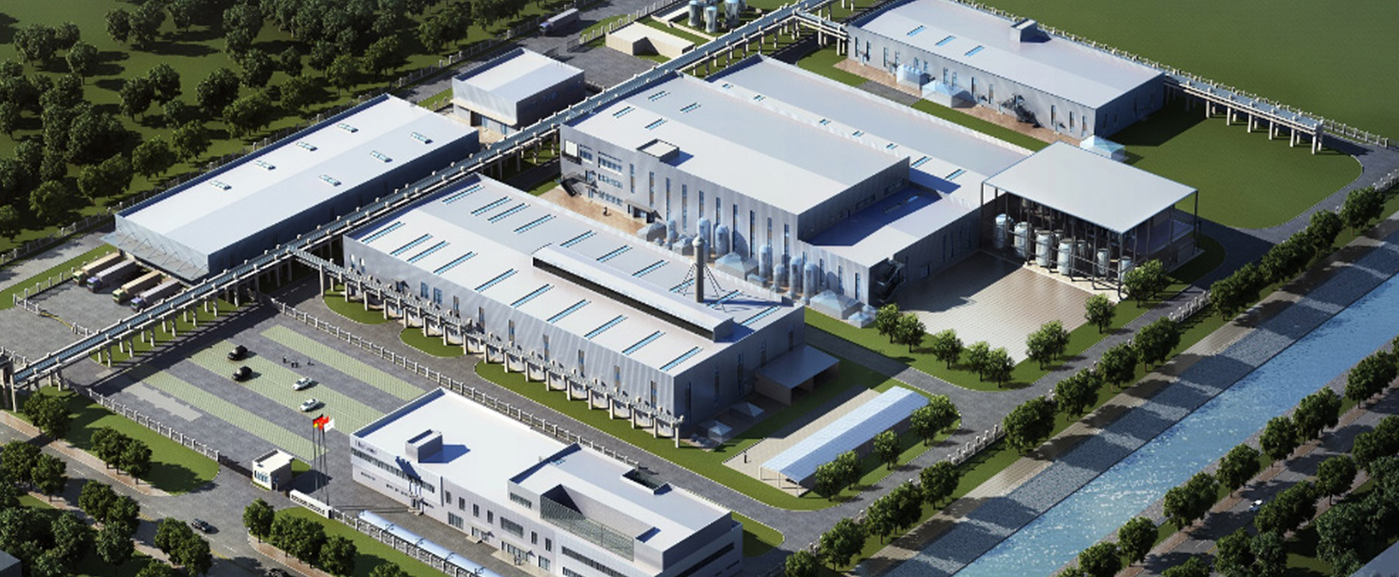
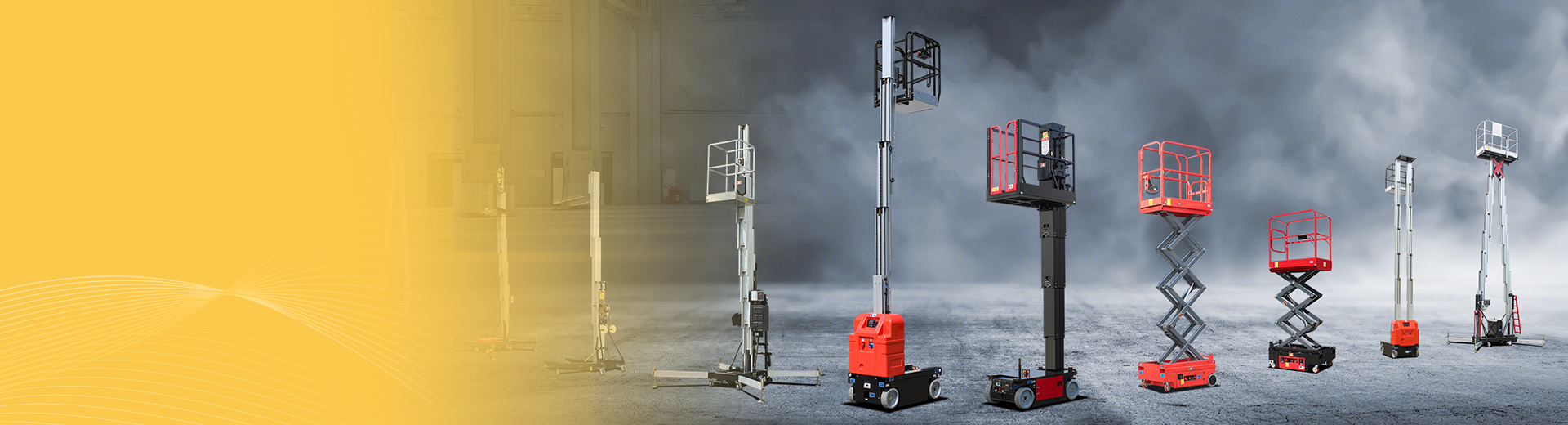
Reeslift Ltd. is a Chinese manufacturer of CE certified aerial working platforms. Our company is located in Feicheng Bianyuan Economic Area, Shandong, China, engaged in Vertical lifts and Scissor Lifts design, production and sales. From the very beginning, we have been dedicated to providing customers with safer indoor aerial working platforms.
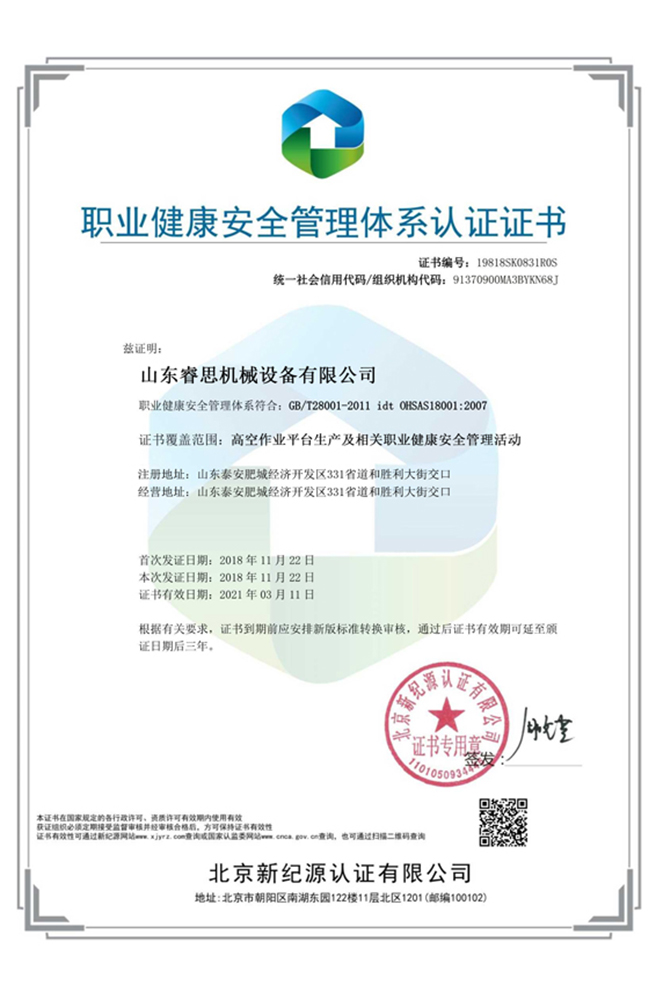
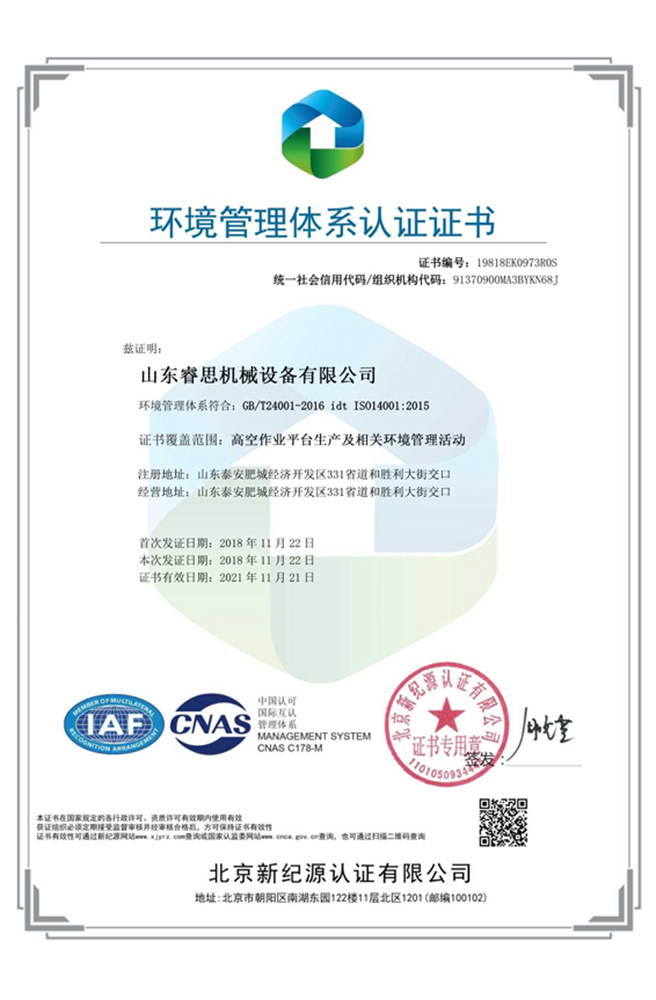
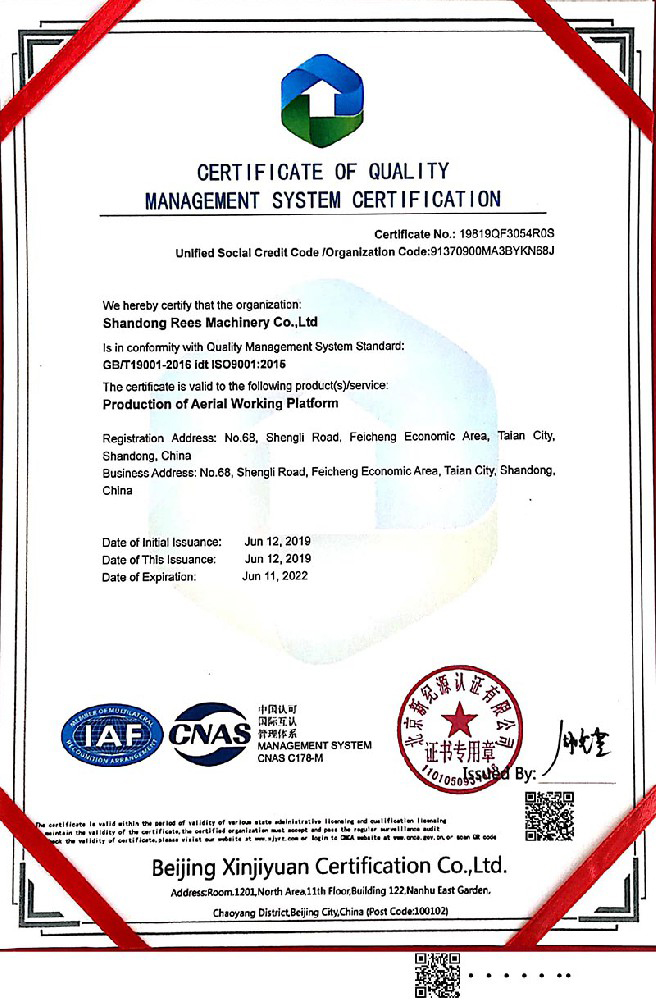
As a professional China Double Mast Vertical Lifts manufacturers and Double Mast Vertical Lifts factory, relying on years of production experience, REES continuously adopts new technologies, new processes and new materials, implements ISO 9001, ISO 14001 and ISO 18001 standards of international quality management system, international environmental management system, and international health and safety management system, and all its products have passed CE certification in Europe. The technical indicators have reached a high level in the same industry in China, and occupied the market with reasonable prices and good services. They are deeply trusted by the vast number of users. The products are exported to more than 100 countries and regions in Europe, Asia and the United States.
Enterprise establishment
Product Varieties
Product category
Production capacity


FORKLIFT STYLE VERTICAL MAST LIFT: The Definitive Technical Reference for Confined-Space Aerial Wor...
View MoreLast week, REESLIFT welcomed valued European client to our manufacturing facility for an on-site fac...
View MoreVertical Mast Lifts – Complete Technical Guide for Professional Users From working principles and a...
View MoreA facility manager walks into a warehouse with a simple task: replace three ceiling light fixtures ...
View MoreREESLIFT has just finished the batch production of customized aerial work platforms for one of our v...
View MoreREES has recently completed the shipment of an AMWP 7100 Series aerial work platform to India, provi...
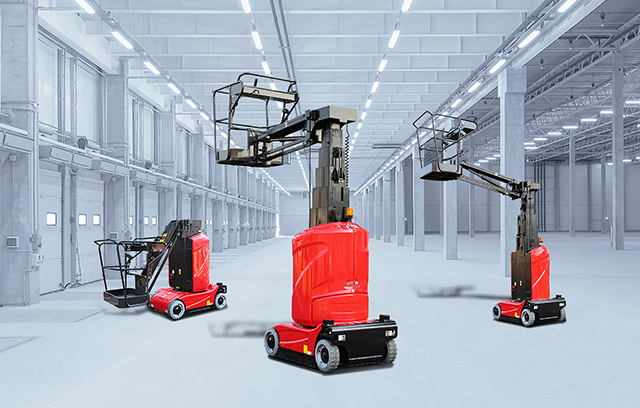
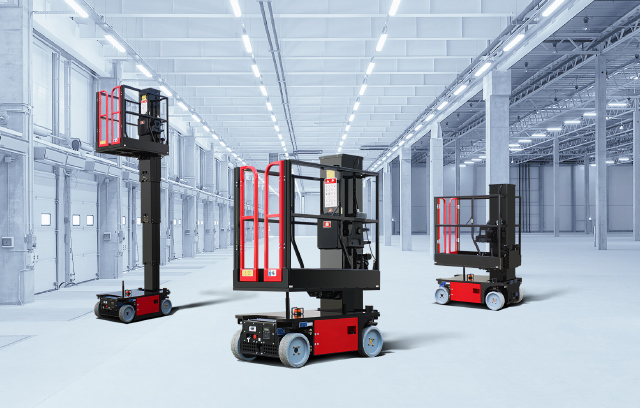
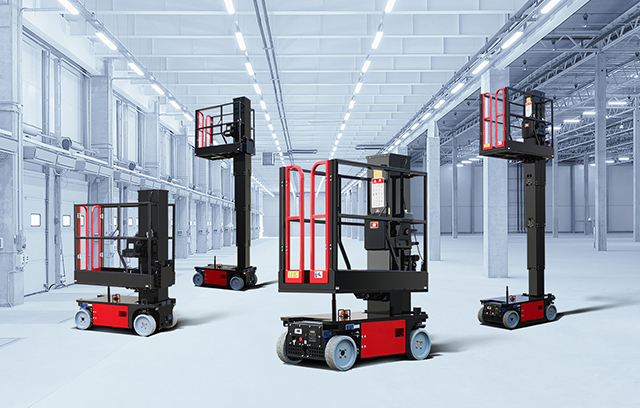
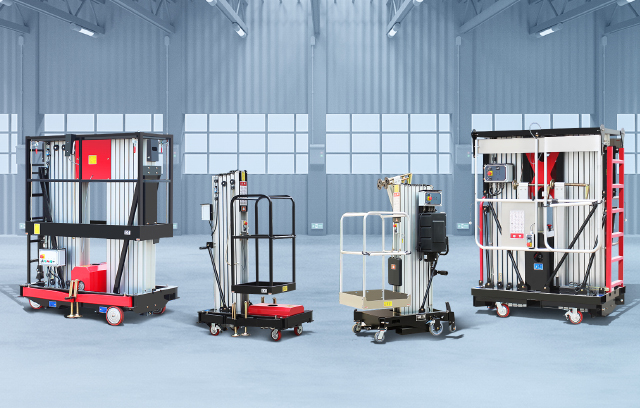
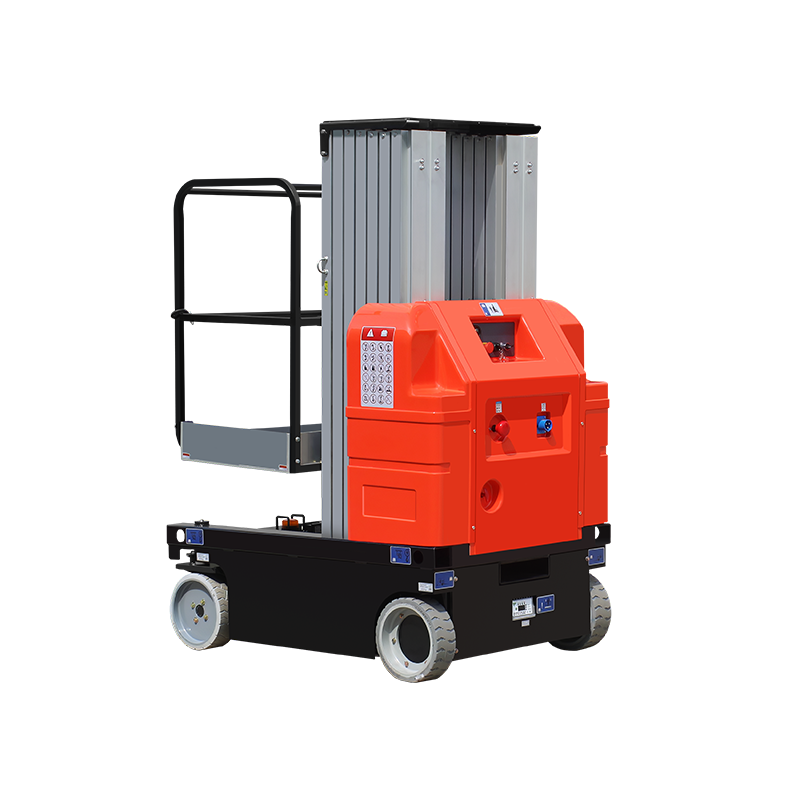
View MoreA Double Mast Vertical Lift represents a sophisticated evolution in aerial access technology, specifically engineered to provide a stable, vertical elevating platform for operators working at height. Unlike single-mast units that rely on a solitary central column, the Double Mast Vertical Lift utilizes two synchronized mast sections. This dual-track architecture significantly increases lateral rigidity, effectively reducing the "mast-sway" common in high-reach scenarios.
As a specialist in aerial access, REES Industries has prioritized this design to meet the rigorous demands of indoor environments where precision and safety are paramount. For facilities requiring reliable height access, these lifts bridge the gap between simple ladders and larger, heavier aerial equipment. By implementing strict ISO 9001 and CE-certified manufacturing processes, REES Industries ensures that each lift maintains high levels of structural integrity, providing a secure, stable workspace that complies with international safety requirements.
The technical superiority of a Double Mast Vertical Lift lies in its mechanical balance and load distribution. When selecting equipment for facility maintenance or high-bay operations, understanding these technical parameters is essential for procurement.
| Technical Specification | Single Mast Lift | Double Mast Vertical Lift |
| Lateral Stability | Moderate | High (Dual-Track Rigidity) |
| Platform Size | Narrow/Limited | Wide/Extended (Multi-Person) |
| Max Load Capacity | Low (Single Operator) | High (Multi-Worker/Heavy Tooling) |
| Rigidity at Elevation | Subject to minor sway | Enhanced Anti-Sway Design |
| Footprint/Storage | Highly Compact | Compact (Relative to Capacity) |
Dual Mast Structural Integrity: At REES Industries, our engineering team utilizes high-strength aluminum profiles in the mast construction. This allows for a significant reduction in total machine weight—crucial for sensitive indoor flooring—while the twin-mast synchronization ensures the platform remains level even when fully extended.
Payload Dynamics: The dual-mast configuration is specifically designed to accommodate the combined weight of two operators, their specialized tools, and necessary materials. This increase in capacity directly enhances project efficiency, allowing teams to complete tasks without the need for frequent platform lowering.
Vertical Reach Capabilities: These lifts are optimized for standard-to-high indoor ceiling heights. By focusing on vertical rather than horizontal reach, the equipment maintains a slim profile that can maneuver through standard doorways and into narrow storage aisles.
Energy Systems: To suit diverse industrial environments, these lifts are available in:
AC Powered: For stationary, long-duration tasks near standard facility power outlets.
DC Battery Operated: Providing cordless freedom for mobility across large warehouse floors or multi-level facilities.
Manual Options: Offering a cost-effective, zero-emission solution for straightforward vertical access requirements.
REES Industries integrates these features into every unit, ensuring that our products serve as an extension of the facility's own safety and maintenance standards. By leveraging our production experience in the Feicheng Bianyuan Economic Area, we provide equipment that balances high-performance output with the mechanical reliability demanded by global B2B procurement professionals.
Double Mast Vertical Lifts are generally categorized based on their mobility and deployment mechanism. Understanding these classifications is vital for facility managers to match the right equipment with the specific demands of their daily operations. REES Industries designs both configurations to ensure that every lift meets the highest standards of structural stability and operational safety, whether the unit is intended for stationary high-bay tasks or dynamic, multi-location facility maintenance.
| Feature | Push-Around Double Mast Lift | Self-Propelled Double Mast Lift |
| Mobility Method | Manual (Operator-driven movement) | Electric (Integrated drive motors) |
| Setup Time | Manual positioning of outriggers | Semi-automated or quick-deploy |
| Ideal Environment | Fixed maintenance zones | High-frequency movement across facility |
| Control Interface | Platform-mounted basic controls | Drive and lift joysticks on platform |
| Operational Efficiency | High for single-location tasks | Exceptional for multi-task maintenance |
Push-Around Aluminum Lifts: These units are designed for maximum simplicity and portability. By utilizing lightweight, high-grade aluminum, REES Industries ensures these lifts remain easy to maneuver by hand, making them ideal for facilities where space is restricted or where the lift is stored when not in use. They are particularly favored for tasks that require the lift to remain in one spot for an extended period, such as theater rigging or localized HVAC service.
Self-Propelled Double Mast Lifts: For facilities that require frequent relocation—such as large-scale warehouses or expansive manufacturing plants—self-propelled units provide the highest efficiency. Operators can drive the unit while elevated (depending on model configurations and safety protocols), significantly reducing the downtime associated with lowering, moving, and re-stabilizing the platform. REES Industries integrates advanced drive systems that allow for precise, smooth navigation through narrow aisles, ensuring that maintenance crews can move efficiently between multiple service points without compromising on the rigid stability provided by the double-mast structure.
By strictly adhering to ISO 9001 and ISO 14001 standards, REES Industries ensures that the mobility systems in both types of lifts—whether manual or electric—are built for durability. We recognize that for a B2B purchaser, equipment reliability is not just a preference; it is a necessity for maintaining uninterrupted supply chain and facility operations. Our focus is to deliver a piece of equipment that is as easy to maintain as it is to operate, backed by the global service experience we have garnered from exporting to over 100 countries.
When selecting aerial access equipment for industrial or commercial use, the technical advantages provided by a Double Mast Vertical Lift are significant. For procurement managers, the primary focus is balancing operational capability with facility safety and long-term maintenance costs. REES Industries designs these lifts specifically to provide a superior return on investment by maximizing uptime and ensuring operator security in indoor environments.
| Strategic Advantage | Benefit to Procurement/Operations |
| Height-to-Stability Ratio | Maintains consistent equilibrium during high-reach maneuvers. |
| Static Floor Loading | Optimized weight distribution for mezzanines and sensitive flooring. |
| Narrow Aisle Navigation | Maximizes usable workspace in high-density facilities. |
| Deployment Workflow | Reduces labor hours required for setup and site preparation. |
Stability Optimization: The dual-mast system is the core of our engineering approach at REES Industries. By utilizing synchronized hydraulic cylinders and robust mast tracking, we ensure the platform remains vibration-free at its maximum working height. This level of stability is critical when operators are performing precision maintenance, such as electrical troubleshooting or delicate installation work, where even minor oscillations could pose a safety risk or lead to task error.
Floor Load Efficiency: Many industrial floors, particularly those on mezzanine levels or within specialized cleanrooms, have stringent weight limitations. Through the use of high-strength, lightweight aluminum alloys, REES Industries has engineered these lifts to have a minimal physical footprint while maintaining exceptional load-bearing capacity. This allows facility managers to utilize the lift on surfaces that cannot support heavier, traditional scissor lifts.
Spatial Optimization: Modern warehousing and industrial layouts are increasingly characterized by narrow aisles and dense storage configurations. Our double-mast units are designed to be slim and compact, allowing them to access confined spaces that would otherwise require manual climbing methods. This compactness does not sacrifice the size of the platform, ensuring that two operators can still work comfortably side-by-side.
Logistics and Deployment: Efficiency in maintenance workflows is directly tied to how quickly a lift can be prepared for use. REES Industries designs the outrigger and leveling systems to be intuitive and rapid, allowing for immediate set-up upon reaching the work zone. As an expert in CE-certified aerial platforms, we recognize that our clients value equipment that minimizes labor costs and maximizes time spent on productive tasks. By choosing REES Industries, businesses gain a partner committed to providing high-quality, reliable, and standardized aerial access solutions that have been proven across our global export network.
Double Mast Vertical Lifts are essential tools in environments where vertical reach must be combined with extreme stability and a compact footprint. At REES Industries, we have analyzed the specific operational requirements of our clients across more than 100 countries to tailor our lift designs for high-demand industrial scenarios. By focusing on safety, mechanical reliability, and ease of use, our equipment serves as a cornerstone for facility management and specialized maintenance crews.
| Sector | Primary Task | Key Requirement for Lift |
| Warehouse/Logistics | Inventory management & shelf servicing | Narrow aisle navigation & high precision |
| Facility Management | HVAC service & lighting maintenance | Stability at height & portability |
| Public Infrastructure | Venue maintenance (gyms, theaters) | Lightweight design for delicate floors |
| Industrial Manufacturing | Assembly line maintenance | Multi-person capacity & tool support |
High-Density Warehouse Inventory Management: In modern warehouses, maximizing storage density often results in narrow aisles. REES Industries provides Double Mast Vertical Lifts that allow operators to navigate these confined spaces safely to inspect inventory or perform rack repairs, effectively replacing inefficient ladder use with a stable, CE-certified platform.
Facility and HVAC Maintenance: Maintaining climate control systems often requires reaching high ceilings and narrow roof cavities. The rigidity of our dual-mast architecture ensures that technicians can handle heavy HVAC components securely. Because our units are designed for indoor use, they offer the quiet operation and compact stowage dimensions that facility managers prioritize to minimize disruption to daily operations.
Venue Maintenance (Theaters, Gymnasiums, and Churches): These environments often feature sensitive flooring—such as polished wood or specialized sport surfaces—that cannot support the high concentrated loads of traditional heavy machinery. The engineering at REES Industries focuses on low floor-loading designs, ensuring our lifts provide the necessary reach for servicing lighting arrays, rigging, and audio equipment without leaving marks or causing structural damage to the venue floor.
Lightweight Construction and Installation: For tasks such as electrical wiring, fire suppression installation, or ceiling panel work, the ability to support two workers and their tools simultaneously is a significant productivity advantage. By complying with international ISO standards, our lifts offer the robust build quality required to maintain safety during these extended maintenance or installation shifts.
By selecting REES Industries as their aerial access partner, B2B procurement professionals secure equipment that is not only built to the highest safety specifications—including CE certification—but is also refined through years of direct feedback from the global industrial sector. We understand that in every use case, from warehouse management to complex facility maintenance, the goal is consistent: to provide an environment where the operator feels secure and the work is completed with precision and efficiency.
Safety is the cornerstone of aerial work, and at REES Industries, our commitment to operator protection is integrated into every stage of the design and manufacturing process. Because we serve a global B2B clientele, we strictly adhere to international safety frameworks, ensuring that every Double Mast Vertical Lift leaving our facility in the Feicheng Bianyuan Economic Area meets stringent CE certification requirements.
| Safety Feature | Operational Function | Compliance Standard |
| Outrigger Interlock | Prevents lift elevation if outriggers are not properly set | CE / ISO 13849 |
| Emergency Descent | Allows manual platform lowering during power failure | CE / ISO 18001 |
| Level Sensors | Monitors ground inclination to prevent tipping | ANSI / ISO |
| Guardrail Systems | Provides fall protection for operators at height | CE / OSHA |
Stability Systems and Outrigger Interlocks: The stability of a Double Mast Vertical Lift is heavily dependent on proper deployment. REES Industries equips all units with high-visibility, intuitive outrigger systems. Crucially, our safety interlock technology prevents the lift from elevating unless the outriggers are fully deployed and the chassis is level. This mechanical safeguard removes human error from the setup process, ensuring that the machine is inherently stable before the operator leaves the ground.
Regulatory Frameworks and Compliance: Operating an aerial platform requires strict adherence to international safety protocols. Our equipment is manufactured in accordance with ISO 9001 (Quality Management), ISO 14001 (Environmental Management), and ISO 18001 (Health and Safety) standards. By maintaining these certifications, REES Industries ensures that procurement managers and safety officers can confidently integrate our lifts into their existing workplace safety programs.
Pre-Operation Inspection Protocols: Before any shift, a systematic check is required to ensure equipment reliability. REES Industries recommends a standardized daily inspection routine that includes:
Mast Integrity: Visual check for any irregularities in the double-mast sliding tracks.
Hydraulic System: Inspecting hoses and seals for fluid leaks or pressure drops.
Control Functionality: Verifying that the platform-mounted controls and emergency stop buttons are fully responsive.
Outrigger Stability: Ensuring all four pads are firmly in contact with the ground and the bubble levels are centered.
Personal Protective Equipment (PPE): While our lifts are designed to provide a secure working platform with high-strength guardrails, REES Industries strongly supports the use of industry-standard fall protection, including approved harnesses and lanyards, particularly when working in proximity to high-voltage equipment or complex structural rafters.
For our partners across more than 100 countries, REES Industries provides not only the physical hardware but also the technical documentation necessary to support comprehensive safety training. We believe that by providing equipment that emphasizes proactive safety features, we empower facility managers to foster a culture of accident-free operations in any industrial or commercial setting.
When incorporating aerial access equipment into facility maintenance or industrial workflows, procurement professionals and safety managers often have specific technical inquiries. REES Industries has compiled these common questions based on our years of experience manufacturing CE-certified equipment for global B2B clients.
| Question Category | Core Consideration |
| Stability | Comparison to alternative lifting platforms |
| Logistics | Floor load and transport requirements |
| Compliance | Training and certification standards |
| Maintenance | Recommended service intervals |
How does the stability of a Double Mast Vertical Lift compare to a scissor lift for indoor maintenance?
The dual-mast architecture provides superior lateral rigidity compared to standard scissor lifts of similar height, as the synchronized masts minimize the swaying motion often felt at elevation. This makes REES Industries lifts ideal for high-precision tasks where stability is critical.
What are the specific floor load considerations when operating on mezzanine levels?
Because REES Industries utilizes high-grade, lightweight aluminum alloys, our lifts are engineered to distribute weight across a wider base. This significantly lowers the point-load on sensitive surfaces, making them safer for mezzanines than heavy steel-base machinery.
Are there specific training requirements for operators?
Yes. While our controls are designed for intuitive operation, all users should be trained in accordance with local safety standards and possess the necessary certifications to operate aerial work platforms, as dictated by local laws and internal corporate safety policies.
How do environmental conditions, such as HVAC airflow or narrow aisles, influence equipment choice?
The compact footprint of our units allows for seamless navigation through standard doorways and narrow aisles. Their design is inherently wind-sensitive; therefore, they are optimized specifically for indoor environments where controlled air circulation is present, ensuring maximum safety and operational stability.
What is the recommended maintenance frequency for the hydraulic and mast systems?
To ensure long-term reliability and compliance with our ISO standards, we recommend a preventative maintenance schedule—typically including a monthly inspection of hydraulic fluid levels, hose integrity, and mast lubrication, followed by a comprehensive annual professional service.
Can these lifts be customized for non-standard ceiling heights?
REES Industries offers a variety of mast configurations to match specific vertical reach requirements. We advise discussing your facility's unique height and clearance specifications with our technical team to identify the optimal model.
How do outrigger interlock systems prevent improper deployment?
Our safety interlocks are physically and electronically integrated into the lift's control circuit. If the outriggers are not firmly positioned and the chassis is not level, the system prevents the activation of the lift motor, effectively eliminating the risk of operating on an unstable base.
What differentiates the transportability of these lifts?
Our push-around models are engineered for manual mobility, making them highly portable for small teams. For larger facilities, our self-propelled units offer integrated electric drive systems that allow for faster repositioning without requiring manual effort, significantly reducing downtime between tasks.
Which certifications should procurement professionals prioritize?
When selecting equipment, prioritize machinery that holds CE certification, as this indicates compliance with European safety, health, and environmental protection requirements. REES Industries maintains these certifications across our entire product line, ensuring universal acceptance in the 100+ countries we serve.
How do I match platform capacity to my project's tool loads?
We recommend calculating the combined weight of all operators, their tools, and any materials being lifted. REES Industries provides detailed load capacity charts for every model; ensuring your operational load remains within these defined parameters is essential for safety and equipment longevity.