HOME / PRODUCTS / SCISSOR LIFTS / Self-propelled Scissor Lifts

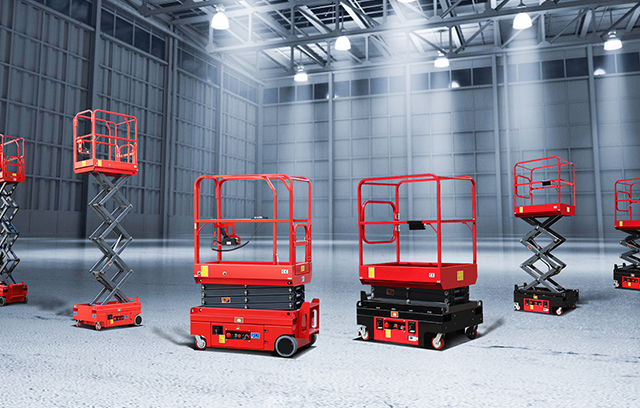
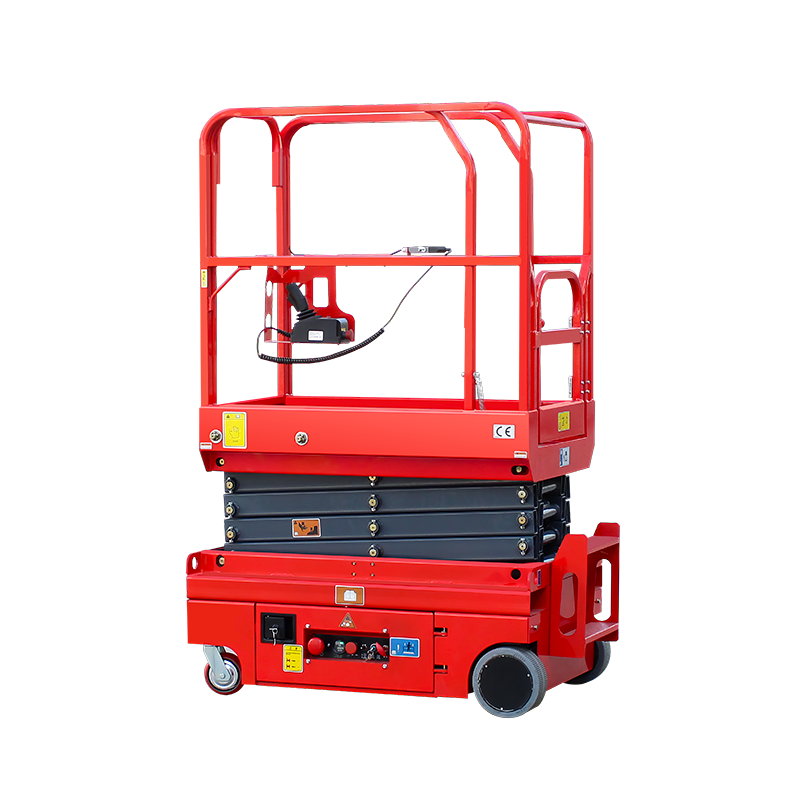
Self-propelled Scissor Lifts Custom

about REES lift

Reeslift Ltd.

Reeslift Ltd.

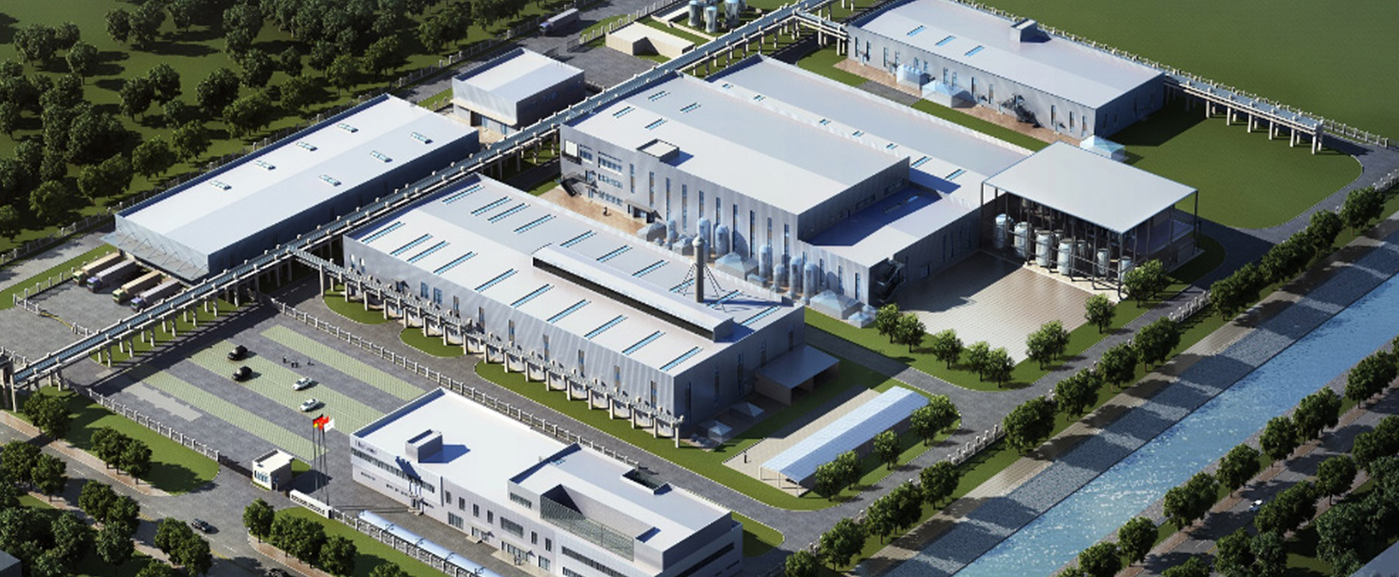
Safer Indoor AWP Expert- Reeslift Ltd. is a Chinese manufacturer of CE certified aerial working platforms. Our company is located in Feicheng Bianyuan Economic Area, Shandong, China, engaged in Vertical lifts and Scissor Lifts design, production and sales. From the very beginning, we have been dedicated to providing customers with safer indoor aerial working platforms.
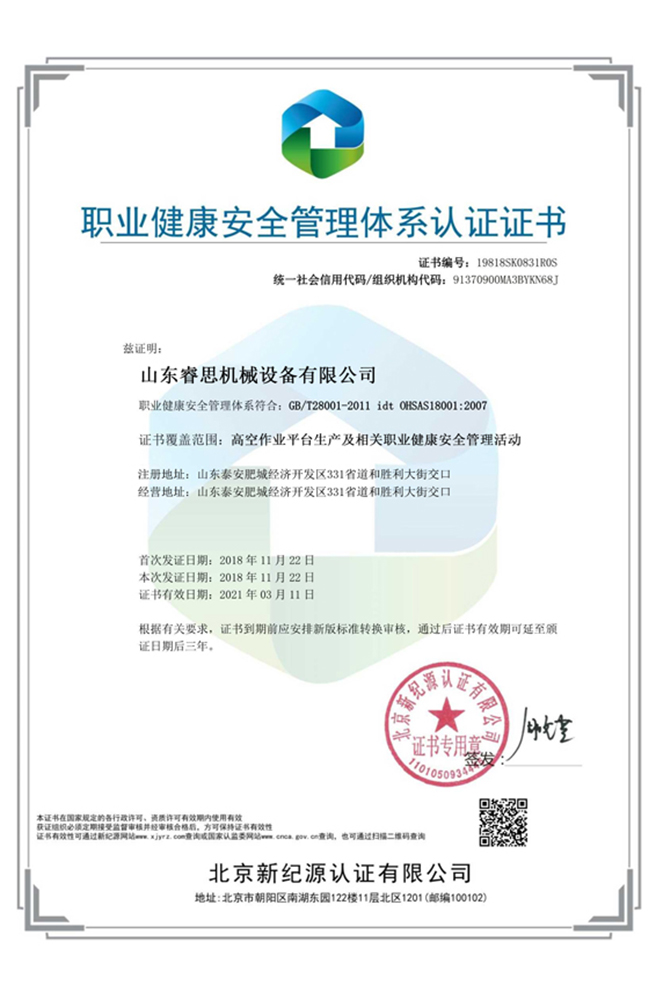
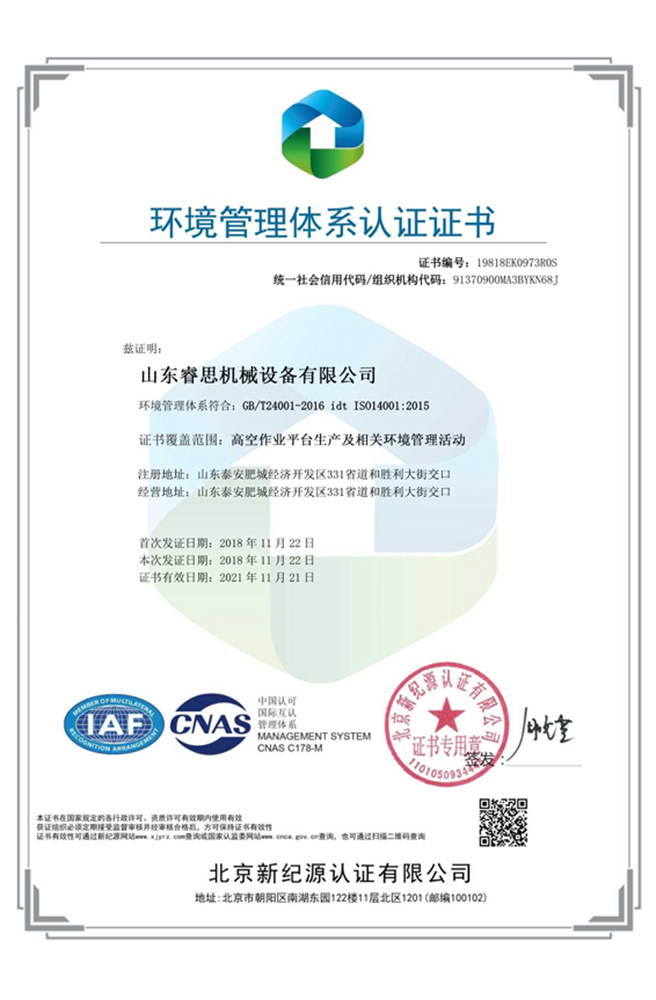
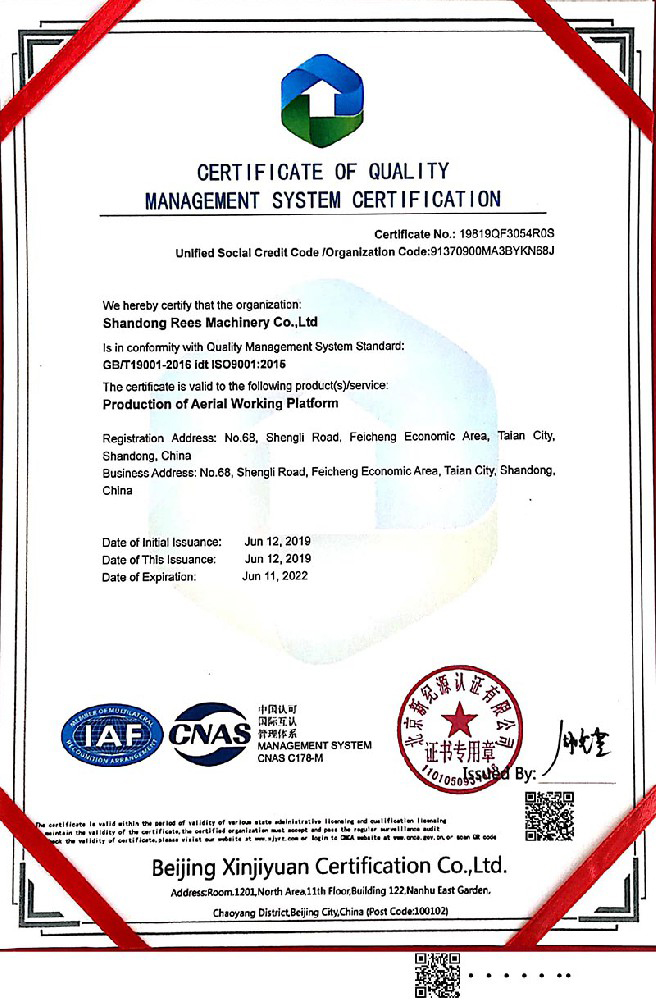
As a professional China Self-propelled Scissor Lifts manufacturers and Self-propelled Scissor Lifts factory, relying on years of production experience, REES continuously adopts new technologies, new processes and new materials, implements ISO 9001, ISO 14001 and ISO 18001 standards of international quality management system, international environmental management system, and international health and safety management system, and all its products have passed CE certification in Europe. The technical indicators have reached a high level in the same industry in China, and occupied the market with reasonable prices and good services. They are deeply trusted by the vast number of users. The products are exported to more than 100 countries and regions in Europe, Asia and the United States.

  • 0

    Enterprise establishment

  • 0+

    Product Varieties

  • 0+

    Product category

  • 0

    Production capacity

Honor

  • honor
  • honor
  • honor

News

Industry Knowledge Expansion

Understanding the Efficiency of Self-Propelled Scissor Lifts

The evolution of aerial work platforms has fundamentally transformed how modern construction sites and industrial maintenance facilities operate. As a dedicated manufacturer, REES Industries recognizes that the primary objective in high-efficiency environments is to balance vertical reach with rapid, safe, and autonomous mobility.

In the past, construction and maintenance crews relied heavily on unstable ladders and traditional scaffolding, which often resulted in significant downtime due to the constant need for disassembly and re-erection. The shift toward Self-Propelled Scissor Lifts has revolutionized these workflows by allowing operators to move the platform precisely to the task without stepping off the lift. At REES Industries, we have observed that this transition is not merely about mechanical convenience; it is about significantly increasing the "up-time" of technicians and construction workers, allowing for continuous operation across expansive job sites. By integrating advanced drive systems into our designs, we ensure that these machines provide a stable, high-capacity foundation that modern projects demand, replacing antiquated manual access methods with modern, reliable, and CE-certified technology.

Core Mechanics of Self-Propelled Scissor Lifts

A Self-Propelled Scissor Lift is defined by its ability to operate both its lifting mechanism and its drive system from the platform controls. Unlike manual "push-around" lifts—which require an operator to descend and physically move the equipment to the next work location—a self-propelled unit allows for seamless transitions between tasks.

Technical Distinction: Self-Propelled vs. Push-Around

The mechanical core of a self-propelled unit lies in its high-torque drive motors and integrated steering system. At REES Industries, our engineering focus is on precision-engineered hydraulic lifting systems coupled with efficient electric drive motors that provide smooth, proportional control.

Feature Self-Propelled Scissor Lifts Push-Around (Manually Propelled)
Mobility Fully autonomous driving/steering Requires manual human force
Operating Height Can often drive while partially elevated Must be fully stowed before moving
Efficiency High (ideal for frequent repositioning) Low (slower workflow)
Operator Fatigue Minimal High (due to manual repositioning)
Surface Usage Suitable for slab/varied surfaces Limited to flat, smooth indoor surfaces

For procurement professionals, the key operational parameter is the "drive-while-extended" capability. This feature, central to the models developed at our facility in Feicheng Bianyuan Economic Area, Shandong, allows operators to fine-tune their position relative to the work face without retracting the lift, thereby maintaining constant productivity throughout the shift. As a manufacturer committed to the ISO 9001 and ISO 14001 standards, REES Industries ensures that every mechanical component—from the high-strength steel scissor stacks to the hydraulic seals—is rigorously tested to meet the high demands of continuous industrial use.

Classification of Self-Propelled Scissor Lifts

To meet the needs of different industrial scenarios, REES Industries has developed targeted product series based on site surface conditions and power requirements. Relying on advanced production processes in Feicheng Bianyuan Economic Area, Shandong, we ensure that every piece of equipment meets CE certification standards and is capable of handling various operational challenges.

Electric Scissor Lifts (Indoor Applications)

These units are designed specifically for level, hardened surfaces such as factory floors, warehouses, and indoor construction sites. The design focus of REES Industries is on maximizing space utilization and maintaining a clean operating environment.

Key Advantages:

Zero Emissions & Low Noise: Meets strict requirements for air quality and noise control in indoor environments.

Non-marking Tires: Protects flooring by preventing black rubber marks on finished surfaces.

Compact Design: Narrow body design allows for easy passage through standard doorways and navigation within tight warehouse aisles.

Rough Terrain Scissor Lifts (Outdoor Applications)

For construction sites with complex terrain, muddy ground, or uneven surfaces, the rough terrain equipment provided by REES Industries is equipped with stronger power systems and enhanced traversal configurations to ensure stability in challenging environments.

Key Advantages:

Four-Wheel Drive (4WD): Provides superior climbing ability and traction on soft soil.

Heavy-Duty Tires: Deep tread patterns and reinforced sidewalls effectively prevent punctures from sharp objects.

Enhanced Chassis: Higher ground clearance ensures the equipment does not bottom out on uneven surfaces.

Parameter Comparison Across Operating Environments

The following table outlines the key technical differences between the indoor electric and rough terrain equipment produced by REES Industries, assisting buyers in precise selection based on project needs:

Technical Parameter Indoor Electric Rough Terrain
Primary Application Level Concrete/Flooring Mud, Sand, Uneven terrain
Power Source High-efficiency DC battery pack Diesel engine or hybrid system
Drive System Two-Wheel Drive (2WD) Four-Wheel Drive (4WD)
Tire Type Non-marking solid rubber Rough terrain pneumatic/filled
Terrain Capability Low (Level surfaces only) High (Anti-slip and high-torque)
Maintenance Focus Battery system, hydraulic oil Drivetrain, fuel engine, tire wear

Operational Advantages for Industrial Projects

At REES Industries, our engineering philosophy is centered on maximizing the operational efficiency of every Self-Propelled Scissor Lift we manufacture. By focusing on technical specifications that directly address procurement needs, we ensure our equipment serves as a force multiplier for onsite productivity.

Enhanced Mobility & Throughput

The most significant operational benefit is the ability to drive the machine while the platform is partially or fully extended. This "drive-at-height" capability allows maintenance teams or installers to move between work points without the time-consuming process of fully lowering the scissor stack. This feature is a hallmark of our current manufacturing output in Shandong, designed to reduce cycle times in large-scale logistics and construction projects.

Improved Safety Engineering

The shift from ladders and traditional scaffolding to our professional-grade aerial platforms is primarily a safety-driven decision. Manual access methods often introduce human-factor risks, such as falls or structural tipping. REES Industries utilizes high-strength steel structures and CE-certified guardrail systems that provide a rigid, stable work environment. Our units are engineered to maintain structural integrity even at maximum elevation, offering workers a secure surface that is compliant with international health and safety standards (ISO 18001).

Payload Capacity and Work Area

Our platforms are designed to accommodate the heavy-duty reality of industrial work. Whether it is multiple operators working in tandem or the requirement to carry heavy tools and components, our lifts provide a larger, more stable surface area than single-person man-lifts.

Comparison of Operational Efficiency: Traditional Access vs. REES Industries Scissor Lifts

To assist procurement professionals in evaluating the return on investment for equipment integration, the following table highlights the operational advantages of implementing our modern Self-Propelled Scissor Lifts over conventional access tools:

Operational Metric Traditional Scaffolding/Ladders REES Industries Scissor Lifts
Setup Time High (Requires manual assembly) Minimal (Immediate operation)
Mobility Stationary (Requires disassembly) Fully mobile (Drive while extended)
Labor Intensity High (Repetitive movement) Low (Single operator controlled)
Platform Stability Variable (Dependent on assembly) High (Integrated rigid chassis)
Personnel Capacity Typically 1 person Multiple workers + Equipment
Safety Compliance Subject to assembly errors ISO & CE certified design

Technical Specifications for Procurement Decisions

For procurement professionals, selecting the correct Self-Propelled Scissor Lift requires a deep dive into technical parameters that align with site-specific needs. At REES Industries, we emphasize transparency in our technical specifications, ensuring that our clients in the international trade sector receive equipment that integrates perfectly with their existing infrastructure.

Vertical Reach: Working Height vs. Platform Height

It is critical to distinguish between these two. Platform Height is the elevation of the floor of the lift itself, while Working Height typically includes the operator's reach (usually +2 meters). When specifying requirements for your facility, always confirm the maximum working height to ensure the lift can reach the highest ceiling fixtures or installation points.

Rated Load Capacity

This defines the maximum weight the platform can support, including personnel, tools, and materials. REES Industries engineers our scissor stacks to handle high load-bearing capacities, ensuring that even under full load, the structure maintains exceptional rigidity and hydraulic precision.

Spatial Constraints

Stowed Dimensions: The physical footprint of the lift when fully retracted. This is crucial for storage and navigation through narrow corridors.

Turning Radius: Our design team at REES Industries optimizes the steering geometry to provide an interior turning radius that allows for efficient navigation in crowded warehouse aisles or narrow factory pathways.

Key Technical Parameters for Selection

When comparing equipment for your supply chain requirements, consider the following technical matrix provided by our engineering department:

Technical Parameter Critical Impact on Operation REES Industries Specification Standard
Working Height Determines the maximum reach scope Tailored to project-specific vertical requirements
Rated Load (Capacity) Limits material and personnel transport Engineered for heavy-duty industrial utility
Stowed Width Determines access to narrow doorways Optimized for standard industrial entry points
Turning Radius Critical for navigating tight corners Minimized for high maneuverability
Drive Speed (Stowed) Affects site-wide movement efficiency High-torque motors for reduced transit time
Gradeability Defines ability to climb ramps/slopes Robust hydraulic torque for site terrain

Power Source Selection

The choice of power source directly impacts your total cost of ownership and site usage.

Battery-Powered (Electric): Ideal for internal warehouse operations. REES Industries utilizes high-capacity battery systems that offer long duty cycles, reducing the frequency of charging downtime during intensive shifts.

Diesel/Dual Fuel: Essential for outdoor environments where high ground clearance and high-torque performance on uneven surfaces are mandatory.

Mandatory Safety Protocols and Regulatory Compliance

Safety is the cornerstone of industrial operations. At REES Industries, we integrate rigorous safety engineering directly into the architecture of our Self-Propelled Scissor Lifts. As a manufacturer fully compliant with ISO 9001, ISO 14001, and ISO 18001 standards, we ensure that our equipment is built to minimize risk for operators and site management alike. Below are the critical protocols required for the safe operation and maintenance of our platforms.

Pre-Operation Inspection Requirements

Every shift must begin with a comprehensive mechanical inspection. Operators should verify:

Hydraulic Systems: Check for leaks or irregular pressure drops in the lifting cylinders.

Safety Decals: Ensure all operational, capacity, and warning labels are legible.

Controls: Function test of both the platform and ground control systems.

Braking & Steering: Verify that the drive motors and braking mechanisms engage immediately upon release of the control handle.

Structural Safety and Fall Protection

REES Industries manufactures all units with heavy-duty guardrail systems designed to withstand significant lateral force. We mandate the use of appropriate fall protection harnesses, which must be attached to designated, reinforced anchorage points on the platform floor. Using these points as intended ensures that, in the event of an unexpected shift in ground stability, the operator remains secured within the protective perimeter of the lift.

Environmental and Site Stability Constraints

Operating a Self-Propelled Scissor Lift involves environmental variables that must be managed to ensure site safety:

Wind Speed Limits: While electric indoor units are strictly for slab surfaces, our RT (Rough Terrain) series is engineered to operate within specific wind speed thresholds. Never operate outdoors if wind velocity exceeds the manufacturer's rated limit for the specific model.

Ground Bearing Pressure: Always ensure the surface is firm and level. If operating on an incline or near an edge, consult the load-versus-tilt angle charts provided in the REES Industries operational manual.

Regulatory Compliance and Certification Matrix

Adherence to global safety standards is not optional in the industrial sector. Our products are designed to meet or exceed the following international requirements:

Safety Metric REES Industries Compliance/Action
CE Certification All models undergo third-party verification for European market standards.
Occupational Health Designed in accordance with ISO 18001 standards for safe manufacturing.
Load Testing Every unit undergoes dynamic load testing prior to leaving the Shandong facility.
Operator Training Operators must hold a certification valid for Self-Propelled Aerial Work Platforms.
Maintenance Cycle Periodic inspections mandated every 6 months to maintain safety certifications.

Technical FAQs for Procurement Professionals

At REES Industries, we understand that procurement decisions are driven by technical clarity and long-term operational viability. To assist you in your selection process, we have compiled the most frequent technical inquiries regarding the deployment and maintenance of our Self-Propelled Scissor Lifts.

What ground conditions are required for operating an electric Self-Propelled Scissor Lift?

Electric units are specifically engineered for level, hardened surfaces such as concrete slabs or finished industrial flooring. Operating these units on soft, unpaved, or highly uneven ground can compromise the stability of the scissor stack and the integrity of the non-marking tire system.

How do I determine the correct lift capacity for a warehouse project?

You must calculate the total weight of the operator(s), the maximum anticipated tool load, and the specific material components being installed. Always select a model where the total weight load is at least 15% below the rated capacity of the platform to ensure safe operation and extended hydraulic lifespan.

What are the critical differences in maintenance requirements?

Battery-powered units require routine inspection of electrolyte levels and terminal integrity, while our RT (Rough Terrain) diesel-powered units require standard engine-related maintenance (oil, filters, fuel systems). REES Industries provides comprehensive service manuals with every purchase to ensure your maintenance team can efficiently manage these requirements.

Can a standard Self-Propelled Scissor Lift be used on a sloped surface?

Standard electric models are designed for 0-degree slopes. If your facility includes ramps, you must check the "Gradeability" specification in our technical manual. Never exceed the rated gradeability, as it affects the braking efficiency and structural stability.

How often should a load test be performed to ensure compliance?

Per ISO safety standards, we recommend a certified load test annually, or immediately following any significant structural repair or component replacement, to verify that the hydraulic system and mechanical interlocks are functioning within rated parameters.

Comparison of Critical Operational Parameters

This table addresses the technical queries commonly encountered during the specification phase of procurement:

Inquiry Category Technical Focus REES Industries Recommendation
Operational Surface Slab vs. Unpaved Use Electric for Slab; Use RT for Unpaved
Capacity Calculation Total Weight (Ops + Tools) Always apply a 15% safety buffer
Maintenance Priority Electric vs. Diesel Follow REES-provided periodic maintenance schedule
Slope Handling Gradeability Strictly adhere to the rated percentage in manual
Compliance Verification Load Testing Perform annually or after major repairs

What specific safety certifications must operators possess?

Operators must hold a valid Aerial Work Platform (AWP) operator certification, which includes both written knowledge of the controls and a practical driving assessment.

Do all indoor-rated models feature non-marking tires as a standard?

Yes, all indoor-rated REES Industries electric models come standard with high-quality non-marking rubber tires to ensure the preservation of your facility's flooring.

How do I calculate the turning radius?

The turning radius is defined by the distance from the center of the turning arc to the outermost edge of the machine. Our engineering team provides these dimensions in our technical data sheets to ensure your fleet can navigate your facility's specific aisle widths.

What is the significance of the "drive-at-height" limit?

This is an automated safety feature. While our lifts allow for movement while elevated, the speed is automatically reduced to a "creep" mode when the platform is above a safe height threshold to ensure maximum stability and operator control.

How does weather impact the stability of Rough Terrain units?

High winds generate lateral pressure on the scissor structure. All REES Industries outdoor-rated lifts are equipped with wind-speed sensors; operation must be suspended if wind velocity exceeds the specific model's rating to prevent potential instability.