Safer Indoor AWP Expert-
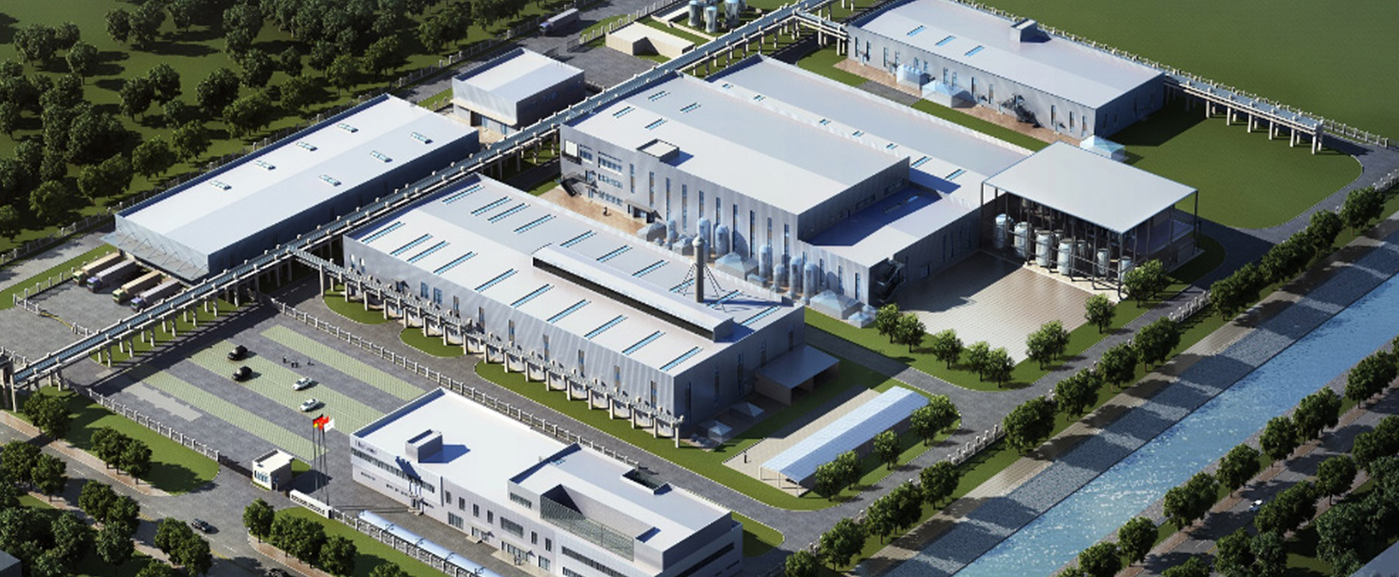
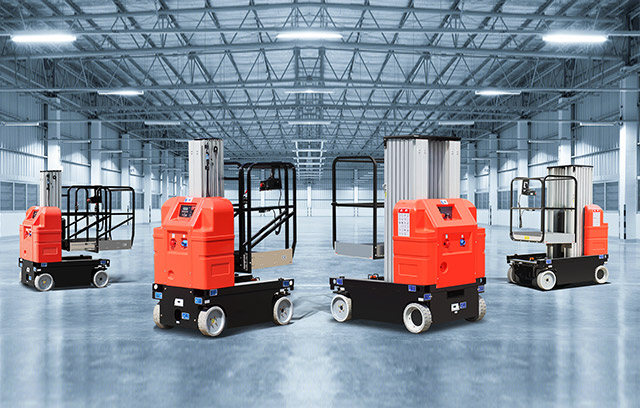
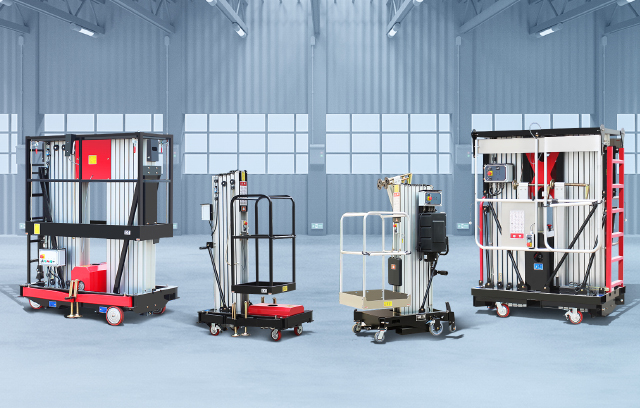
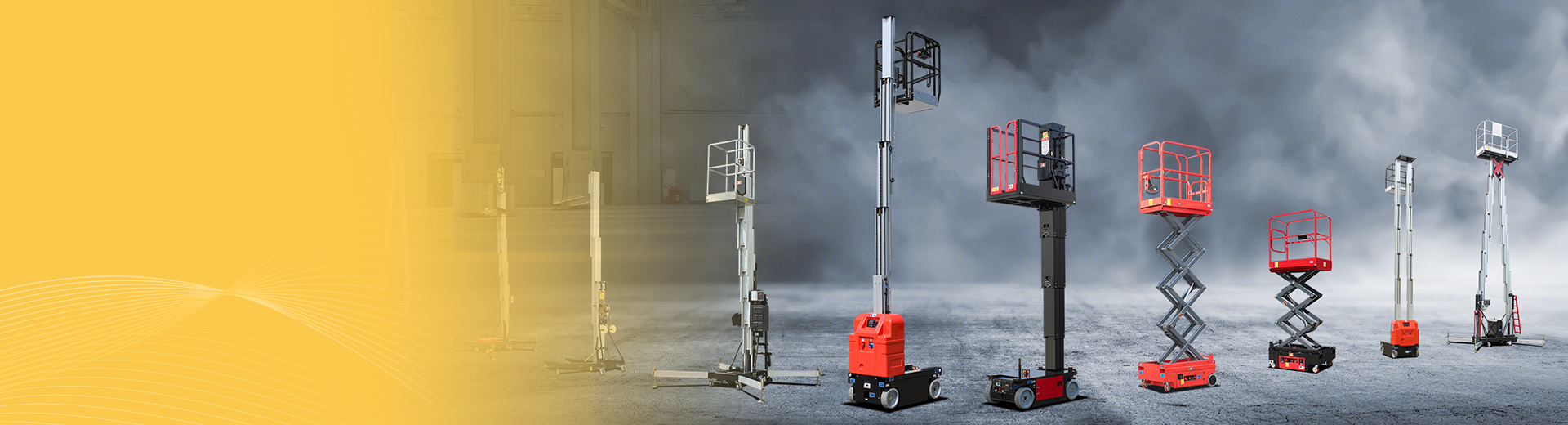
Reeslift Ltd. is a Chinese manufacturer of CE certified aerial working platforms. Our company is located in Feicheng Bianyuan Economic Area, Shandong, China, engaged in Vertical lifts and Scissor Lifts design, production and sales. From the very beginning, we have been dedicated to providing customers with safer indoor aerial working platforms.
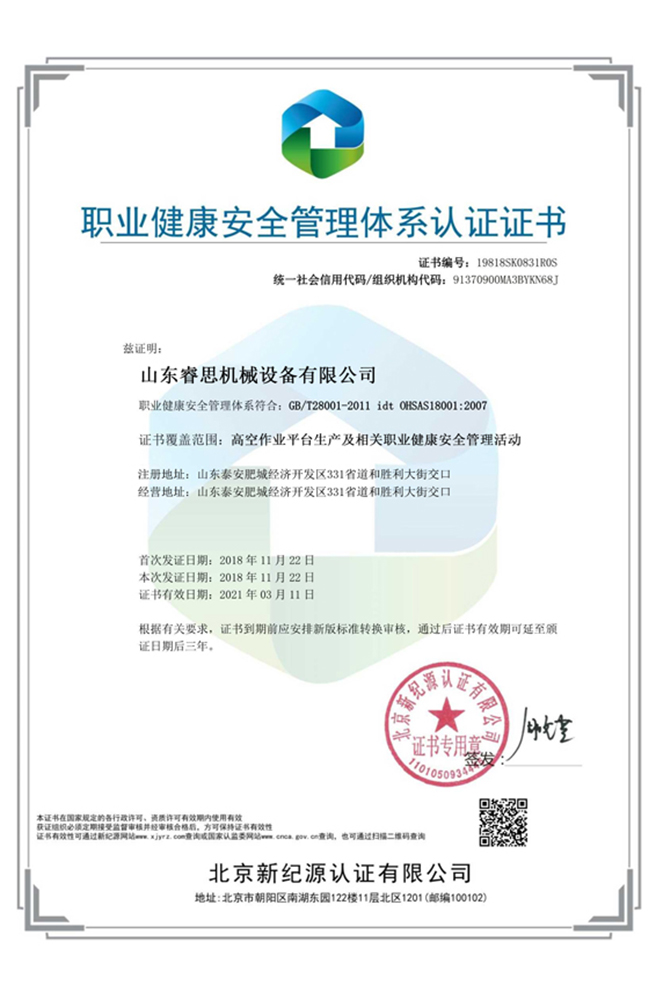
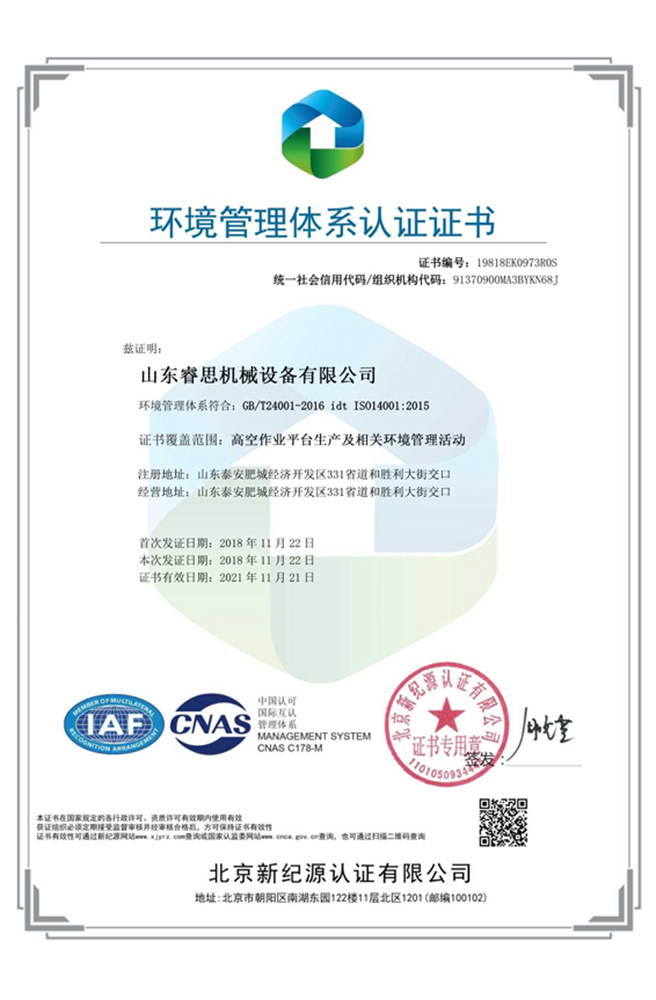
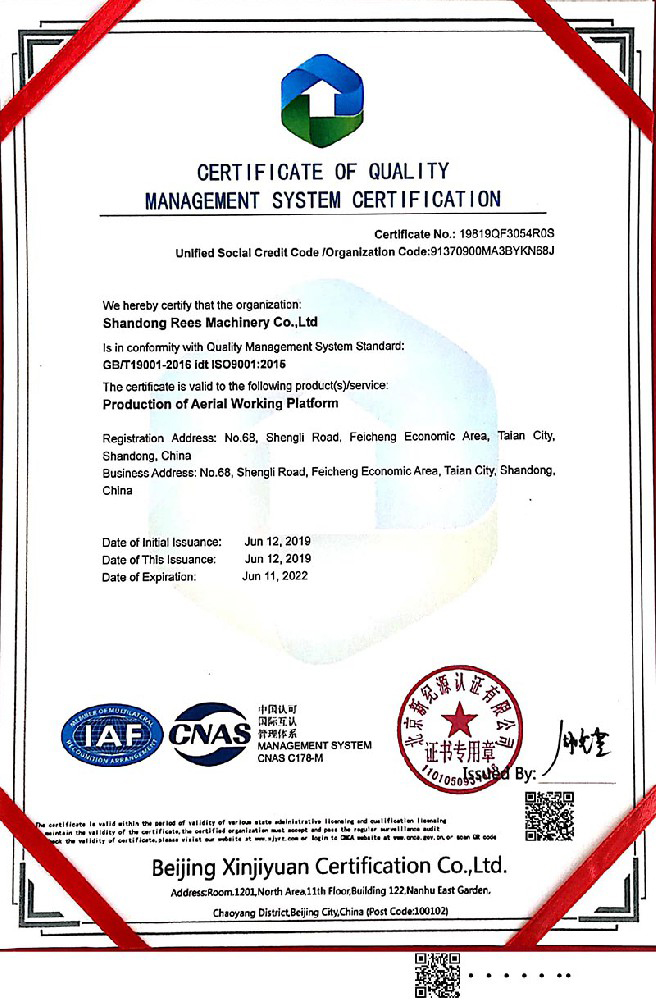
As a professional China Push-around Scissor Lifts manufacturers and Push-around Scissor Lifts factory, relying on years of production experience, REES continuously adopts new technologies, new processes and new materials, implements ISO 9001, ISO 14001 and ISO 18001 standards of international quality management system, international environmental management system, and international health and safety management system, and all its products have passed CE certification in Europe. The technical indicators have reached a high level in the same industry in China, and occupied the market with reasonable prices and good services. They are deeply trusted by the vast number of users. The products are exported to more than 100 countries and regions in Europe, Asia and the United States.
Enterprise establishment
Product Varieties
Product category
Production capacity


The core competitiveness of aerial work equipment has never been solely about working height and ope...
View More1. Industry Background & REES ’ Quality Control Positioning Indoor aerial work platforms and sup...
View MoreAnother container of REESLIFT GTWY1 vertical lifts has been loaded and shipped to Singapore. The mac...
View MoreIndustry Technical Guide Material Lifts, Platform Lifts & Hydraulic Material Lift Systems: A C...
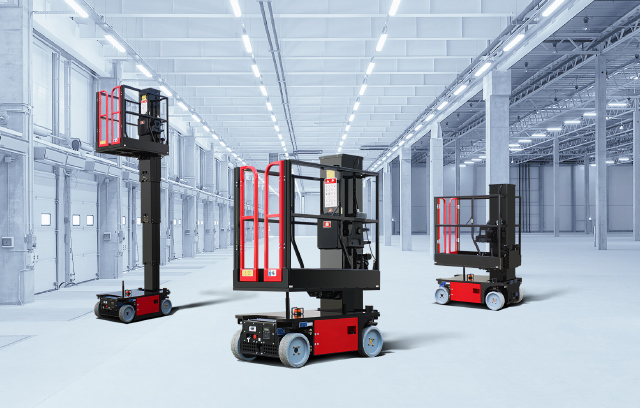
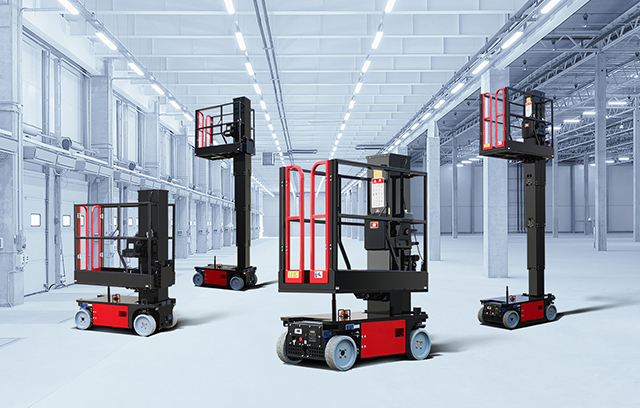
View MoreRecently, REESLIFT officially launched the upgraded GTWY1 Push-around Single Mast Vertical Lift. The...
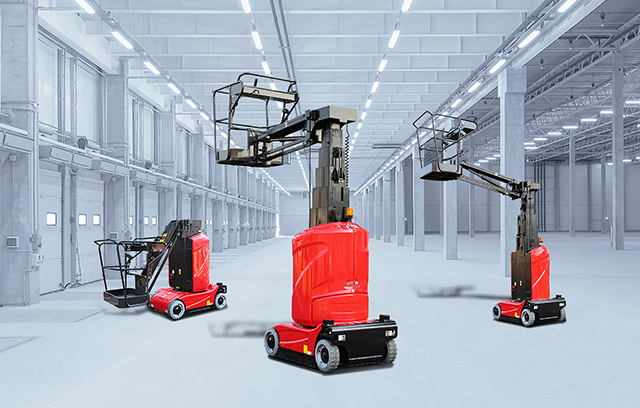
View MoreREESLIFT is assembling the AMWP13-7100 vertical mast boom lifts, built specifically for European cus...
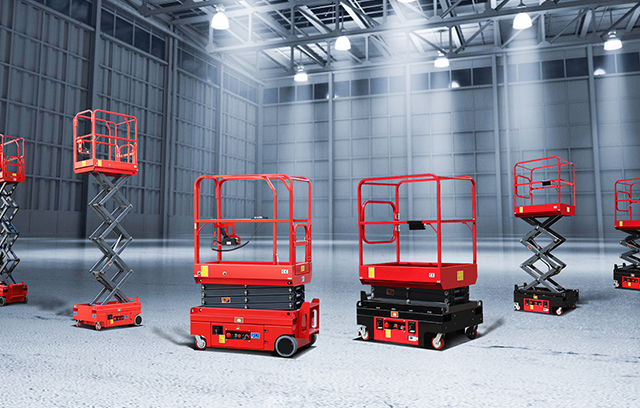
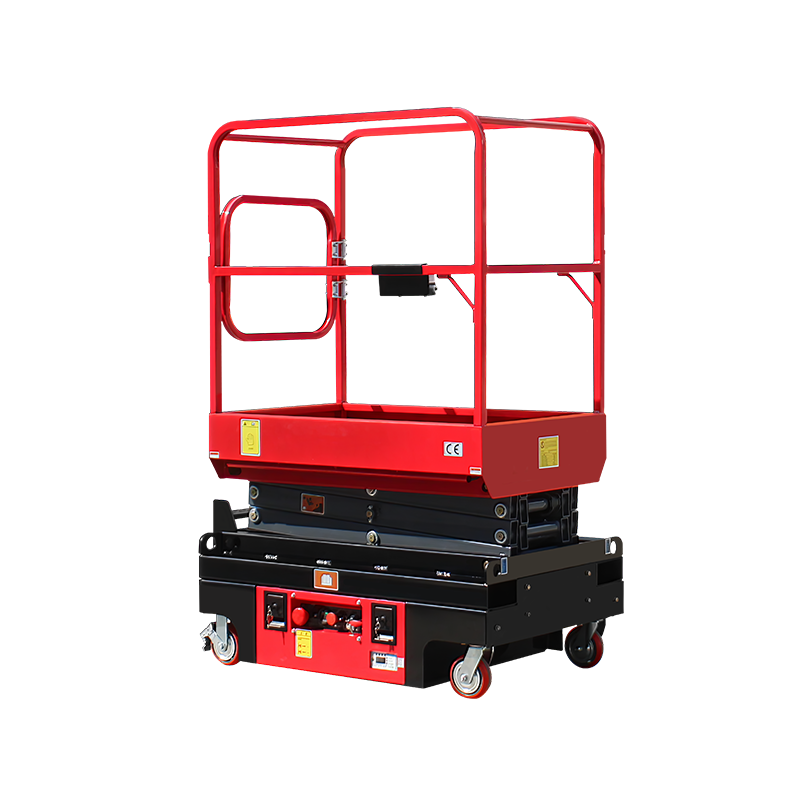
View MoreA push-around scissor lift is a specialized, manually-propelled aerial work platform (AWP) designed to provide safe, stable vertical access in indoor environments. Unlike heavy-duty construction machinery, these units rely on a manual force to reposition the lift, while the elevation mechanism—typically hydraulic or mechanical—is powered to lift the operator and their tools to the desired working height. As a specialized manufacturer, REES Industries designs these platforms to prioritize operator safety and mechanical simplicity, ensuring that each unit meets stringent international standards for performance and structural integrity.
The fundamental engineering difference between a push-around scissor lift and a self-propelled electric scissor lift lies in the propulsion system.
Manual Propulsion: Push-around models are designed for portability and lightweight maneuvering. They lack the heavy batteries and drive motors required for self-propulsion, significantly reducing the machine's total mass.
Self-Propelled Units: These models incorporate complex drivetrain systems and heavy traction batteries, which increase the total weight and footprint, often limiting their use on delicate floors or within restricted structural load-bearing areas.
For facility managers and procurement professionals, the push-around scissor lift is a critical asset for high-frequency, low-level indoor maintenance. REES Industries has observed a growing demand for these platforms in sectors where space and floor-load constraints are paramount. By eliminating the complexity of a motorized drivetrain, these lifts offer a more streamlined, low-maintenance solution that aligns with the lean operational requirements of modern industrial and commercial facilities. Our commitment to ISO 9001, ISO 14001, and ISO 18001 standards ensures that these units provide a reliable alternative for organizations that require frequent access to ceiling-mounted infrastructure without the added complexity of heavy equipment.
To assist in your procurement decision-making, the following table illustrates the technical distinctions between these two categories of aerial work platforms:
| Feature | Push-Around Scissor Lift | Self-Propelled Electric Scissor Lift |
| Propulsion | Manual (Operator-driven) | Electric Motorized Drive |
| Machine Weight | Significantly Lower | Heavy (due to batteries/motors) |
| Floor Loading | Minimal (Ideal for raised/delicate floors) | High (Requires higher structural ratings) |
| Complexity | Simplified Mechanical Architecture | Advanced Electronics & Drive Systems |
| Maintenance | Low (Minimal moving parts) | High (Drive motor/sensor maintenance) |
| Compliance | CE Certified (REES Industries Standards) | Varies by manufacturer |
Note: REES Industries provides CE-certified solutions specifically engineered to optimize the weight-to-performance ratio for indoor-focused tasks, ensuring maximum safety and operational efficiency across global markets.
One of the most significant challenges in facility management is performing maintenance on delicate or weight-sensitive surfaces. Surfaces such as polished concrete in showrooms, gymnasium flooring, mezzanine levels, or raised computer room floors often have strict floor-load capacity limits that heavy, self-propelled machinery cannot meet.
REES Industries engineers our push-around scissor lifts with a focus on minimized ground-bearing pressure. By utilizing high-strength, lightweight alloys and optimizing the structural geometry of the scissor mechanism, our platforms allow operators to work safely on surfaces that would otherwise be inaccessible. This ensures that facility maintenance can be conducted without the risk of surface damage or the need for expensive floor reinforcement.
Efficiency in interior environments requires the ability to navigate tight constraints. Our design philosophy at REES Industries prioritizes a compact footprint, ensuring that our units can effortlessly pass through standard doorway openings and travel within passenger elevators. This mobility is essential for multi-story facilities, allowing maintenance teams to move the platform from one area to another without disassembling the unit or using large freight lifts.
In industrial and commercial settings, equipment downtime is a significant operational cost. The simplified mechanical design of a push-around scissor lift is a primary benefit for long-term maintenance. Because these units do not utilize complex drive motors, steering servos, or heavy-duty travel controllers, the number of potential failure points is greatly reduced.
REES Industries emphasizes "maintenance-by-design," implementing high-quality hydraulic components and durable, long-life pivot points. By adhering to international ISO 9001 quality management standards, we ensure that every assembly—from the hydraulic cylinders to the safety guardrails—is built for longevity and operational readiness.
Modern facilities—ranging from hospitals and pharmaceutical clean rooms to schools and corporate offices—demand quiet, emission-free operation. REES Industries manufactures platforms that excel in these sensitive environments. Our hydraulic systems are precision-tuned to operate with minimal noise output, and because they do not rely on combustion engines, there are zero exhaust emissions. This makes them the ideal choice for indoor zones where air quality and noise pollution must be strictly controlled.
The following table contrasts the operational advantages of REES Industries push-around designs against conventional, heavier indoor access equipment:
| Operational Metric | REES Industries Push-Around Lift | Standard Self-Propelled Equipment |
| Ground Pressure | Low (Distributed loading) | High (Concentrated loading) |
| Passage Capability | Standard Doorways/Elevators | Restricted (Often requires high clearance) |
| Acoustic Signature | Ultra-Quiet (Hydraulic optimization) | Moderate (Motor/Drive noise) |
| Emission Levels | Zero (Purely hydraulic/manual) | Zero (Battery) / Potential battery fumes |
| Maintenance Cycle | Periodic Inspection (Simplified) | Frequent (Sensors/Drive systems) |
| Floor Compatibility | Delicate (Tile, Gym, Mezzanine) | Industrial Concrete Only |
By integrating these technical benefits, REES Industries ensures that our global clients, from Europe to the United States, receive equipment that balances superior safety compliance with practical, everyday utility in diverse indoor architectures.
The versatility of push-around scissor lifts makes them indispensable for operations that require precise, frequent, and safe vertical access within confined spaces. REES Industries has collaborated with diverse global partners to refine our platform designs, ensuring they meet the specialized demands of various sectors.
For routine facility upkeep, the ability to reach ceiling-mounted infrastructure quickly is paramount. Our lifts are frequently deployed for:
HVAC Servicing: Accessing air handling units, ventilation ducts, and ceiling-mounted sensors for filter changes and sensor calibration.
Lighting Maintenance: Replacing high-bay LED fixtures or servicing integrated lighting systems in office atriums and industrial hallways.
Structural Inspection: Performing non-destructive testing or minor repairs on ceiling surfaces, fire sprinkler systems, and cable trays.
REES Industries provides stable, secure platforms that allow maintenance technicians to work comfortably at height, significantly improving efficiency compared to traditional ladder usage.
In modern retail and warehousing environments, managing vertical space is critical. Push-around scissor lifts are utilized for:
Stock Picking: Accessing high-level shelving units in retail stockrooms where space is too tight for motorized equipment.
Signage Installation: Precise positioning for marketing displays, seasonal banners, and instructional signage in high-traffic retail aisles.
Inventory Auditing: Safe, rapid verification of inventory levels on elevated racks without disturbing the retail floor layout.
During the final phases of interior construction, precision and surface protection are vital. Our lifts support:
Electrical Routing: Installing conduit, cable management systems, and recessed lighting in newly finished commercial interiors.
Precision Finishing: Facilitating drywall installation, ceiling tiling, and painting work that requires a stable, tremor-free platform.
Plumbing Integration: Installing overhead pipes and specialized fire-suppression lines in constrained interior geometries.
The following table demonstrates how REES Industries push-around designs compare to alternative methods across typical industrial tasks:
| Application Task | REES Industries Push-Around Lift | Traditional Ladders/Scaffolding |
| Operator Safety | High (Guardrails, anchored harness) | Low (Fall risk, instability) |
| Efficiency/Speed | High (Rapid vertical deployment) | Low (Assembly time/fatigue) |
| Space Utilization | High (Compact, maneuverable) | Low (Fixed footprint/Obstruction) |
| Ergonomics | Excellent (Platform support) | Poor (Physical strain) |
| Multi-task Utility | Versatile (Storage for tools) | Limited (Single operator/Minimal tools) |
| Floor Impact | Minimal (Non-marking tires/Low weight) | Variable (Potential surface damage) |
By choosing REES Industries platforms, facility operators in over 100 countries benefit from equipment designed to minimize risk while maximizing throughput. Whether you are managing a high-end commercial facility in Europe or a large-scale manufacturing plant in Asia, our CE-certified designs provide the necessary technical foundation for safe and efficient vertical operations.
When procuring aerial work platforms for indoor facility management, understanding the precise relationship between machine capabilities and your physical space constraints is essential for safety and operational throughput. REES Industries provides transparent technical data to ensure our clients can select the model that aligns perfectly with their site-specific requirements.
Procurement professionals must distinguish between Platform Height (the standing surface elevation) and Working Height (typically calculated as Platform Height + 2 meters). Our design team at REES Industries ensures that our technical datasheets clearly define these reach parameters, allowing for accurate mapping of your facility’s ceiling height to our product specifications.
Safety is contingent upon understanding the total load on the platform. This encompasses:
Operator Weight: The weight of the personnel using the equipment.
Tools and Equipment: Specialized gear, spare parts, or materials required for the maintenance task.
REES Industries Engineering Standard: Our platforms are rated for a specific maximum load capacity, tested rigorously to ensure stability at full extension. We recommend maintaining at least a 10% safety buffer below the maximum rated capacity for prolonged operation.
Floor load ratings are critical, particularly for mezzanine levels or raised flooring. REES Industries calculates the Gross Machine Weight—the total mass of the lift—to provide a clear understanding of the static floor load. Unlike motorized lifts, our push-around designs offer a significantly lower ground-bearing pressure, making them suitable for environments where heavy floor-load requirements are prohibited.
The efficiency of your maintenance team depends on the chosen lifting architecture:
Manual Mechanical Crank: Offers a power-free operation, ideal for locations where electrical infrastructure is limited or for rapid, repetitive low-level tasks.
DC Battery-Powered Hydraulic: Provides consistent, effortless elevation for frequent daily use. REES Industries utilizes high-cycle, long-life battery systems that comply with international health and safety management standards to ensure minimal downtime.
Stability during operation is paramount. REES Industries offers two primary configurations:
Outrigger-Equipped Models: Provide a wider base for increased stability at higher vertical reaches.
Non-Outrigger Models: Designed for environments requiring ultra-compact footprints, allowing the lift to be positioned closer to walls or equipment racks.
The following table serves as a reference for evaluating your facility’s needs against our engineering capabilities:
| Technical Specification | Standard Low-Level Unit | Extended Reach Unit |
| Platform Height | 2.5m - 3.5m | 4.0m - 5.0m |
| Working Height | 4.5m - 5.5m | 6.0m - 7.0m |
| Rated Load Capacity | 150 kg | 200 kg |
| Stowed Width | < 0.75m (Door-friendly) | 0.80m - 0.90m |
| Lifting System | Manual / DC Hydraulic | DC Hydraulic |
| Total Machine Mass | Ultra-Light (< 350kg) | Lightweight (< 600kg) |
At REES Industries, we adhere to ISO 9001 and CE certification standards, ensuring that every technical specification provided is verified through rigorous factory testing. By understanding these parameters, your procurement team can optimize equipment selection to meet the precise demands of your facility, ensuring safe and reliable operation for years to come.
To support diverse industrial requirements, REES Industries has developed a specialized portfolio of push-around scissor lifts. Our design philosophy focuses on maximizing vertical reach while minimizing the physical footprint, ensuring that our equipment meets the stringent safety and performance demands of our clients across Europe, Asia, and the United States.
The following models represent the core of our engineering capability, each designed to meet CE certification standards and the ISO management systems we uphold at our manufacturing facility in Feicheng Bianyuan Economic Area.
1. Compact-Lite Series (Model R-300): Engineered for ultra-narrow aisles and standard passenger elevators. This model features a manual mechanical crank system, making it the most eco-friendly and cost-effective solution for frequent, short-duration maintenance tasks where battery charging infrastructure is not readily available.
2. Hydra-Lift Professional Series (Model R-500H): The workhorse of our fleet. This series utilizes a high-efficiency DC battery-powered hydraulic system. It is designed for multi-tasking industrial environments, providing the sustained power needed for long-duration ceiling work, painting, and electrical fitting.
3. High-Reach Stability Series (Model R-700S): Equipped with a reinforced outrigger system, this model is built for higher working heights while maintaining a stable, rigid platform. It is the preferred choice for facilities with high atriums, large-scale warehouses, and assembly plants.
This table summarizes the technical variance between our standard models to assist in selecting the platform best suited to your facility’s operational frequency and vertical access requirements.
| Feature | Compact-Lite (R-300) | Hydra-Lift (R-500H) | High-Reach (R-700S) |
| Max Platform Height | 3.0 m | 5.0 m | 7.0 m |
| Lifting Mechanism | Manual Mechanical | DC Hydraulic | DC Hydraulic |
| Load Capacity | 150 kg | 200 kg | 200 kg |
| Outriggers | Integrated (Optional) | Integrated (Standard) | Reinforced (Standard) |
| Primary Advantage | Portability/No Power | Ease of Use/Endurance | Reach/Stability |
| Best Application | Office/Retail Maintenance | Industrial/HVAC Servicing | Warehouse/Atrium Repair |
All REES Industries models are manufactured using new technologies and premium materials, strictly following the ISO 9001 (Quality Management), ISO 14001 (Environmental Management), and ISO 18001 (Health and Safety) standards. By maintaining this high level of technical standardization, we ensure that our equipment provides consistent, predictable performance regardless of the industrial sector in which it is deployed.
Safety is the cornerstone of the manufacturing philosophy at REES Industries. As a leading provider of CE-certified aerial work platforms, we recognize that operating in indoor facilities—often near personnel, delicate infrastructure, and high-value machinery—requires a rigorous, multi-layered approach to safety engineering. Our equipment is designed not only to meet but to exceed the safety requirements mandated by global industrial standards.
Every operator must perform a systematic check before elevating the platform. REES Industries provides comprehensive documentation with every unit, detailing the critical inspection points:
Hydraulic Integrity: Checking for fluid levels and ensuring no visible leaks at connection points.
Wheel and Brake Mobility: Verifying that the manual casters are free of debris and that the foot-operated wheel locks are fully engaging.
Safety Gate Interlock: Testing the platform entrance to ensure it latches securely and includes a safety sensor or mechanical lock to prevent accidental opening.
Guardrail Structural Integrity: Confirming all fasteners are tight and guardrails are free from deformation.
Stability is non-negotiable when working at height. REES Industries designs our outrigger systems with clear, intuitive engagement indicators.
Level Ground Operation: All push-around models are engineered for use on level, load-bearing surfaces.
Visual Safety Indicators: Our models feature high-visibility indicators that alert the operator if the outriggers are not deployed or if the unit is not properly leveled before lifting.
Interlock Systems: On hydraulic models, the lift mechanism is electronically interlocked to prevent operation if the outriggers are not in the fully extended and locked position, providing an essential fail-safe.
Compliance with ANSI and OSHA guidelines is integrated into the design of every REES Industries platform. This includes:
Standardized Guardrails: All platforms are equipped with mid-rails and toe-boards to prevent tool slippage and operator falls.
Fall Protection Anchors: Dedicated, structurally rated anchor points are built into the platform to allow operators to attach lanyards if local regulations or company policy mandate the use of a harness.
Even the most advanced equipment requires skilled handling. REES Industries strongly advises that all personnel undergo formal MEWP (Mobile Elevating Work Platform) training. Understanding the nuances of manual propulsion and hydraulic operation is critical to ensuring long-term safety within your facility.
The following table highlights the commitment REES Industries makes to safety, contrasting our internal manufacturing standards against baseline industrial expectations.
| Safety Feature | Industry Baseline Requirement | REES Industries Standard |
| CE Certification | Mandatory in Europe | Fully Compliant (All Models) |
| Outrigger Interlock | Optional on basic models | Mandatory (All applicable models) |
| Material Integrity | Standard Steel | High-Strength Alloy (Fatigue Tested) |
| Safety Guardrails | Required height | Reinforced, Multi-point fixation |
| Inspection Manuals | Basic operations | Detailed, ISO-standardized maintenance logs |
| Quality Management | Basic QC | ISO 9001/14001/18001 Verified |
By integrating these rigorous protocols, REES Industries provides facility managers with peace of mind. Our focus on safety ensures that our products are not just tools for efficiency, but active components in your facility’s comprehensive health and safety management system.
Determining the most efficient way to acquire aerial work platforms is a critical decision for facility managers. At REES Industries, we work closely with procurement departments across more than 100 countries to analyze whether an outright purchase or a rental model best suits their specific operational cycles.
The primary driver for asset acquisition is the frequency of use.
When to Buy: If your facility requires daily or weekly maintenance—such as routine HVAC servicing, frequent lighting changes in large atriums, or ongoing interior upkeep—purchasing a REES Industries unit is typically the most cost-effective solution. Owning your equipment allows for immediate response times, ensures the unit is always available on-site, and gives you total control over the maintenance schedule to maximize the machine's lifespan.
When to Rent: For one-off renovation projects, seasonal inventory audits, or rare deep-cleaning cycles, renting is often preferred. This approach avoids the need for capital expenditure and long-term storage, allowing you to use a lift only when required by specific project timelines.
Managing equipment across multiple facilities or sites is a key logistical factor. REES Industries designs our push-around scissor lifts to be highly portable, which simplifies your internal logistics. Our units can be easily moved within a facility using standard elevator systems or transported between branch offices, reducing the reliance on third-party logistical support that often complicates rental agreements.
To assist in your strategic planning, the following table compares the implications of purchasing REES Industries equipment versus the rental model:
| Procurement Factor | Outright Purchase | Rental Model |
| Long-term Cost | Lower (Lower per-use cost) | Higher (Cumulative daily/weekly fees) |
| Equipment Availability | Immediate (On-site 24/7) | Dependent on supplier scheduling |
| Maintenance Control | Full (Strict internal oversight) | Limited (Dependent on rental provider) |
| Capital Investment | Initial CapEx required | Opex (Project-based expense) |
| Technical Familiarity | High (Consistent operator training) | Low (Operator adjusts to different units) |
| Compliance Integrity | Verified (Maintained to company standard) | Variable (Varies by rental company) |
At REES Industries, our objective is to provide professional-grade aerial work platforms that offer long-term value. Whether you are looking to integrate a permanent solution into your facility's maintenance inventory or require reliable machinery for a specific timeline, our team in the Feicheng Bianyuan Economic Area is committed to supporting your procurement strategy with transparent technical data and high-quality equipment.
Our lifts are engineered with non-marking, high-density tires and optimized weight distribution. Unlike motorized machinery, the lightweight construction of REES Industries platforms ensures that pressure per square centimeter remains within the safe limits for delicate surfaces like wood, tile, or raised mezzanine flooring.
These platforms are designed specifically for level indoor surfaces. We recommend operating only on surfaces with a slope of 0 degrees. If slight gradients are unavoidable, they must not exceed 1–2 degrees, and the platform must always be locked using the integrated wheel brakes before any elevation.
To maintain the longevity of your REES Industries equipment, we recommend storage in a dry, climate-controlled environment. For models featuring DC battery-powered hydraulic systems, the battery should be kept charged according to our maintenance manual to prevent degradation of the battery's chemical life.
A reliable rule of thumb is to add 2 meters to the platform height to calculate the "working height" (the reach of an average operator’s arms). REES Industries models are labeled by their maximum platform height; ensure your ceiling height allows for this, plus an additional 0.5-meter safety buffer.
Our DC hydraulic units are equipped with universal charging systems compatible with standard regional voltage (e.g., 220V in most international markets). They do not require industrial three-phase power, making them highly versatile for office and retail environments.
We recommend a professional inspection every 6 months, or every 200 operational cycles, whichever comes first. This includes checking fluid levels, hose integrity, and the function of safety interlocks to maintain CE certification standards.
This summary table provides quick reference metrics for common operational questions regarding REES Industries equipment:
| Operational Query | Recommendation/Specification |
| Max Working Slope | 0° (Level surfaces only) |
| Ideal Storage Condition | Dry, indoor, ambient temperature |
| Charging Voltage | 110V - 220V (Model dependent) |
| Safety Reach Buffer | Minimum 0.5m between head and ceiling |
| Hydraulic Service Cycle | 6 months / 200 cycles |
| Tire Type | Non-marking, high-density polyurethane |
At REES Industries, we are committed to full technical transparency. If you have specific questions regarding a unique site application or custom integration, our engineering team in the Feicheng Bianyuan Economic Area is available to provide detailed consultations to ensure our platforms meet your facility’s exact needs.