Safer Indoor AWP Expert-
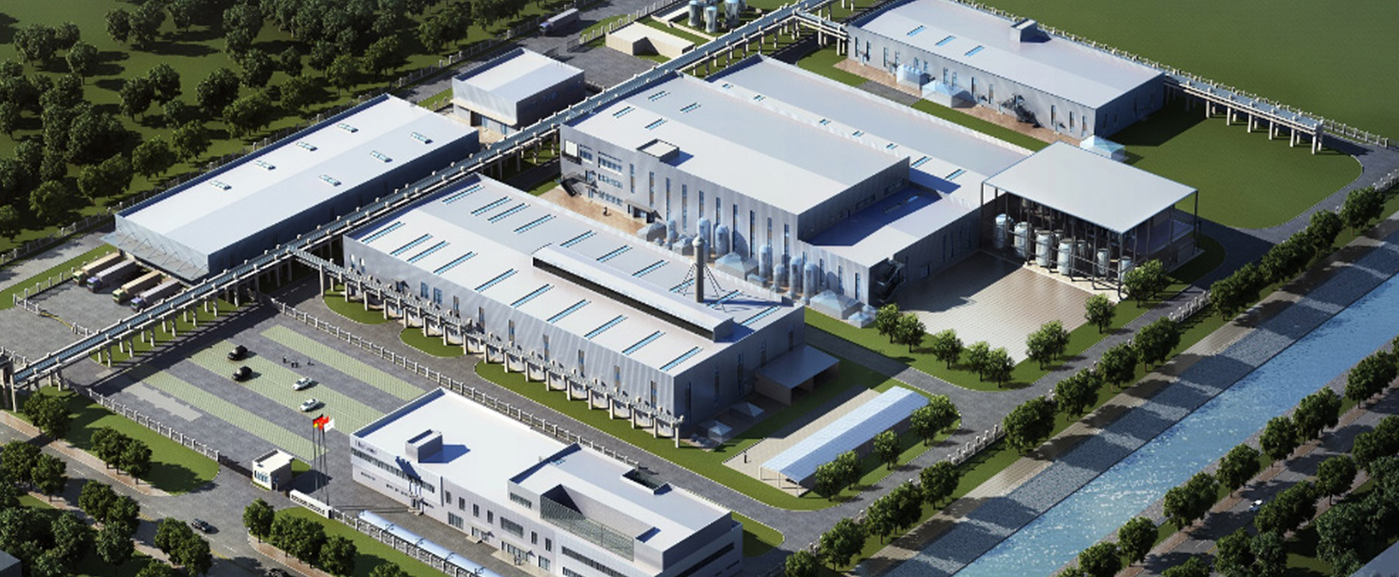
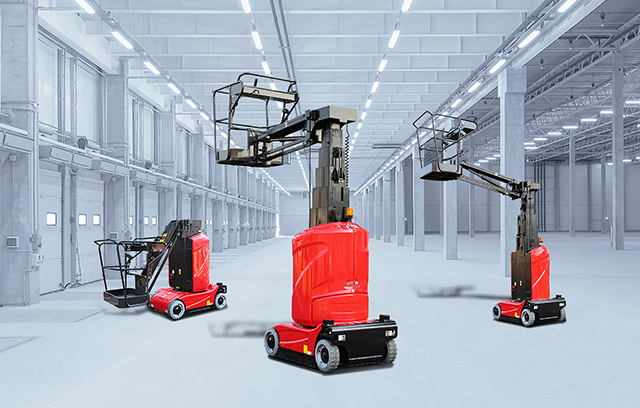
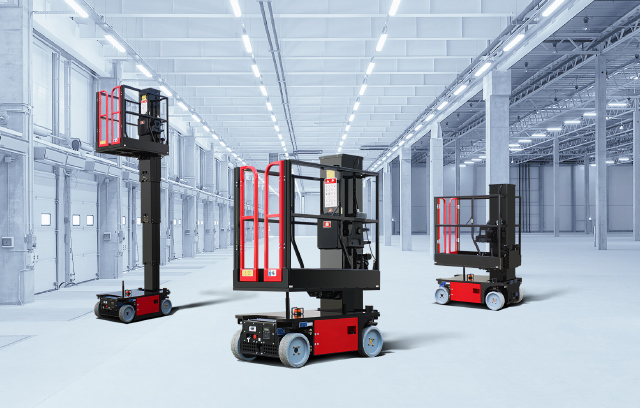
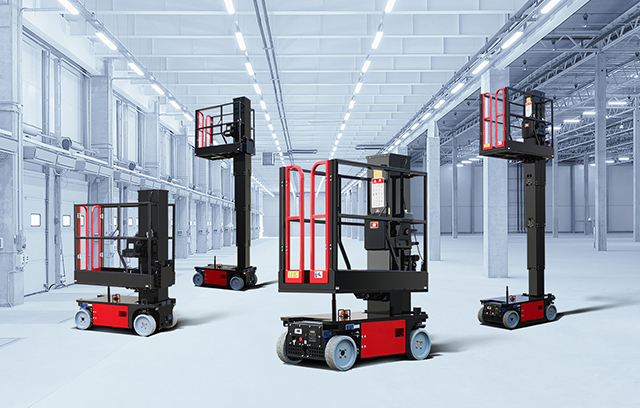
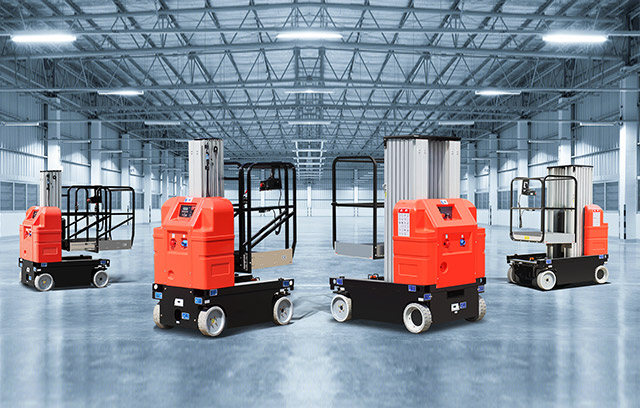
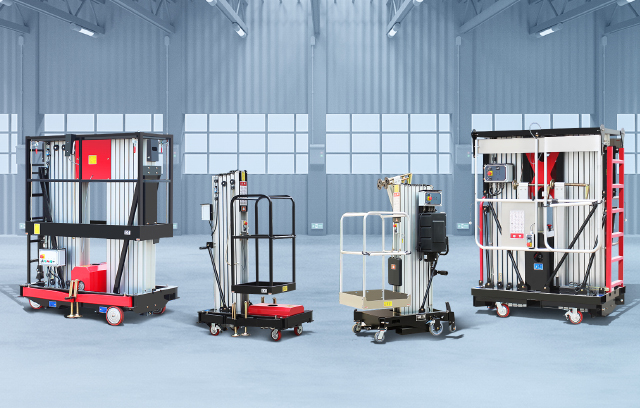
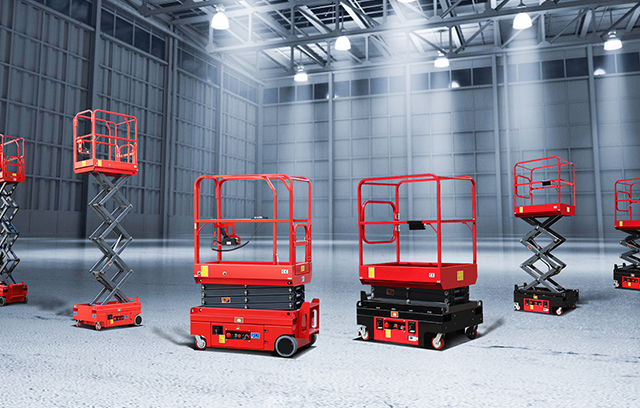
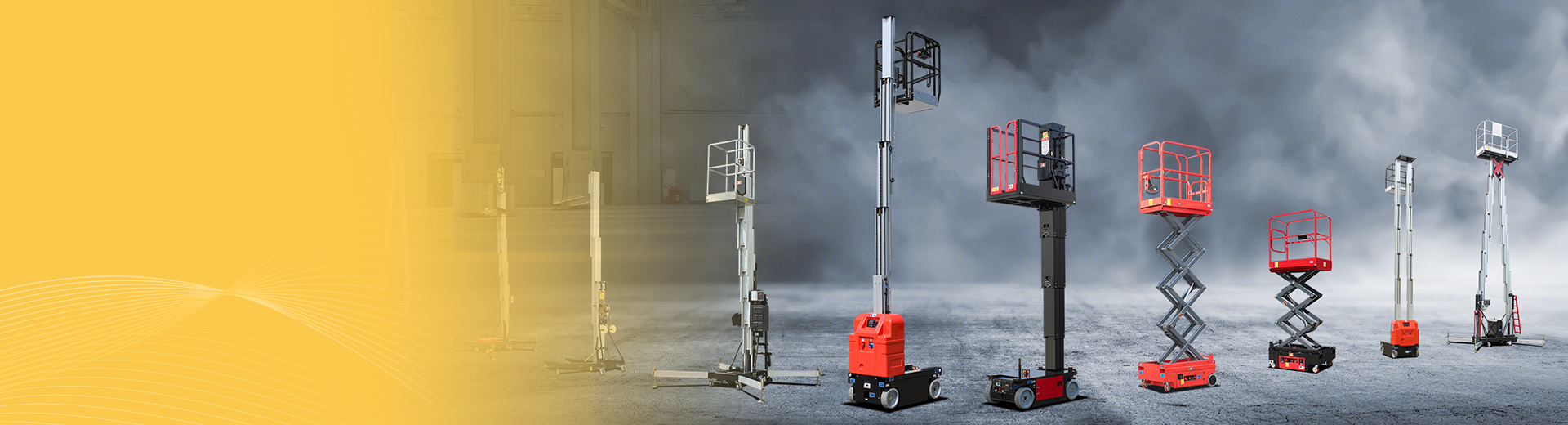
Reeslift Ltd. is a Chinese manufacturer of CE certified aerial working platforms. Our company is located in Feicheng Bianyuan Economic Area, Shandong, China, engaged in Vertical lifts and Scissor Lifts design, production and sales. From the very beginning, we have been dedicated to providing customers with safer indoor aerial working platforms.
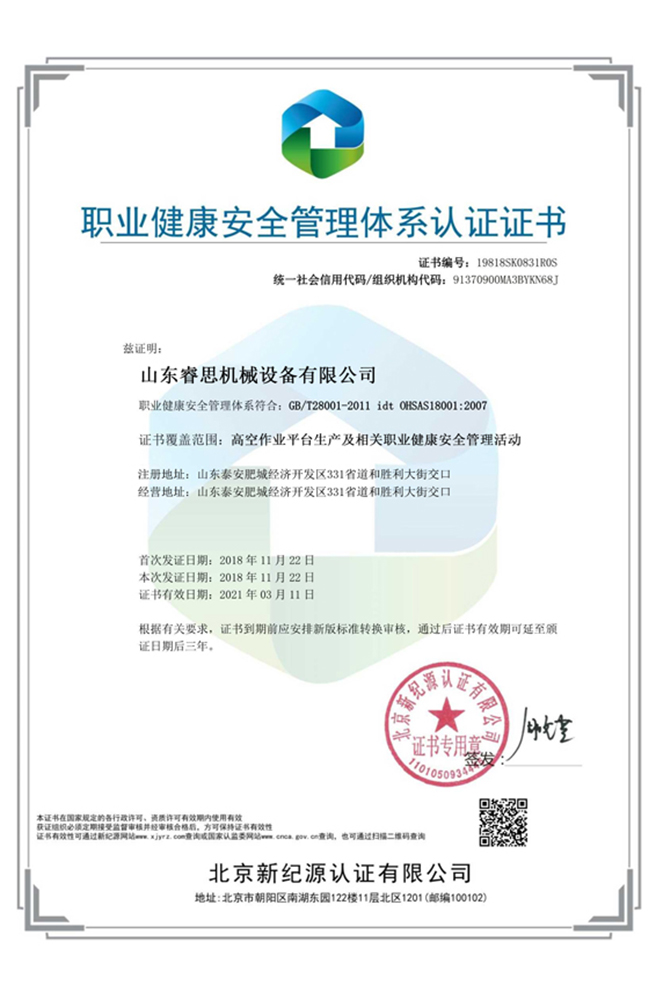
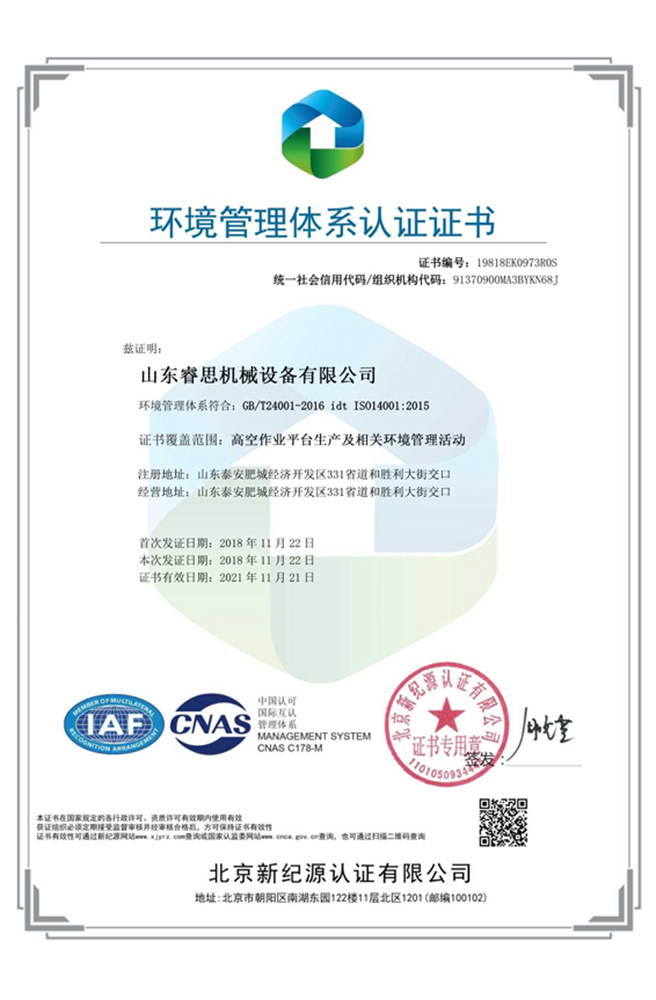
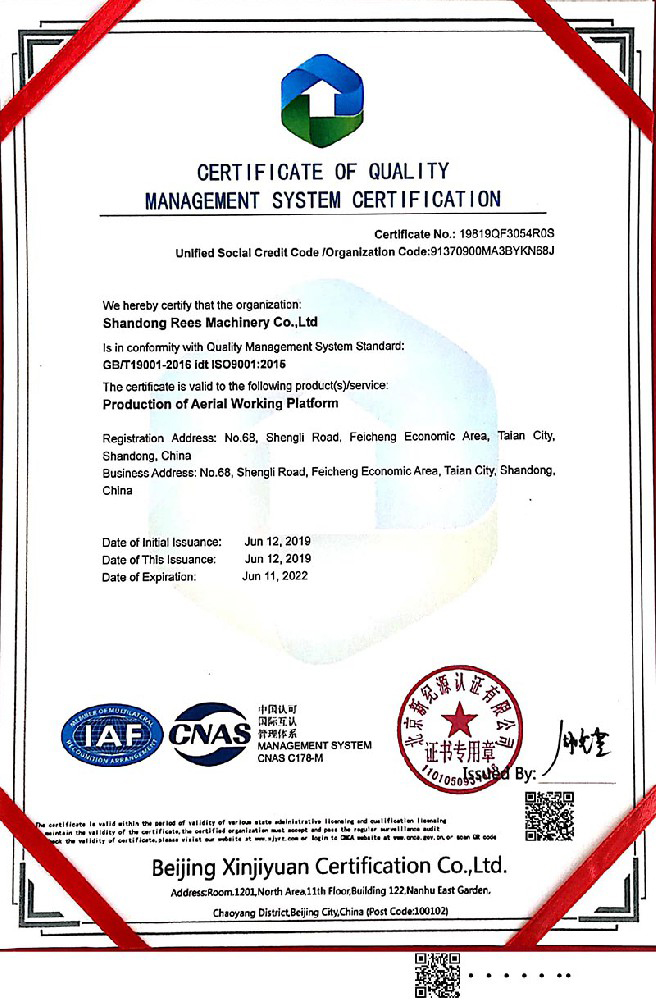
As a professional China Industrial Material Lifts manufacturers and Industrial Material Lifts factory, relying on years of production experience, REES continuously adopts new technologies, new processes and new materials, implements ISO 9001, ISO 14001 and ISO 18001 standards of international quality management system, international environmental management system, and international health and safety management system, and all its products have passed CE certification in Europe. The technical indicators have reached a high level in the same industry in China, and occupied the market with reasonable prices and good services. They are deeply trusted by the vast number of users. The products are exported to more than 100 countries and regions in Europe, Asia and the United States.
Enterprise establishment
Product Varieties
Product category
Production capacity


Factory-Direct One Man Lift Solutions: Manufacturing Standards, Applications and Technical Specific...
View MoreREES has successfully completed a comprehensive software system upgrade for its AMWP12-7110 vertical...
View MoreAs the scorching summer heat intensifies, the entire REESLIFT team stands firmly at their posts and ...
View MoreFactory Insight Inside the Production Line: How an Industrial Material Lift Is Built to Hold Its ...
View MoreAt REES, every aerial work platform is built with professional expertise, advanced manufacturing pro...
View MoreA Key Step in Strengthening Our Presence in the Latin American Market Recently, REES successfully co...
View MoreIn modern manufacturing, logistics, and heavy-duty production environments, the efficient vertical movement of goods is critical to maintaining high throughput. REES Industries understands that the reliance on manual labor for repetitive lifting tasks not only limits operational speed but also introduces unnecessary risks. By integrating advanced Industrial Material Lifts into your workflow, companies can achieve precise control over cargo handling, ensuring that components, raw materials, and finished goods are positioned exactly where they are needed.
As a manufacturer located in the Feicheng Bianyuan Economic Area, Shandong, China, REES Industries specializes in the design and production of high-performance lifting equipment. We recognize that true efficiency in industrial environments is driven by equipment that adheres to rigorous international standards, including ISO 9001, ISO 14001, and ISO 18001. Our focus on safety-driven engineering ensures that our Industrial Material Lifts provide the stability and durability required for demanding 24/7 production schedules.
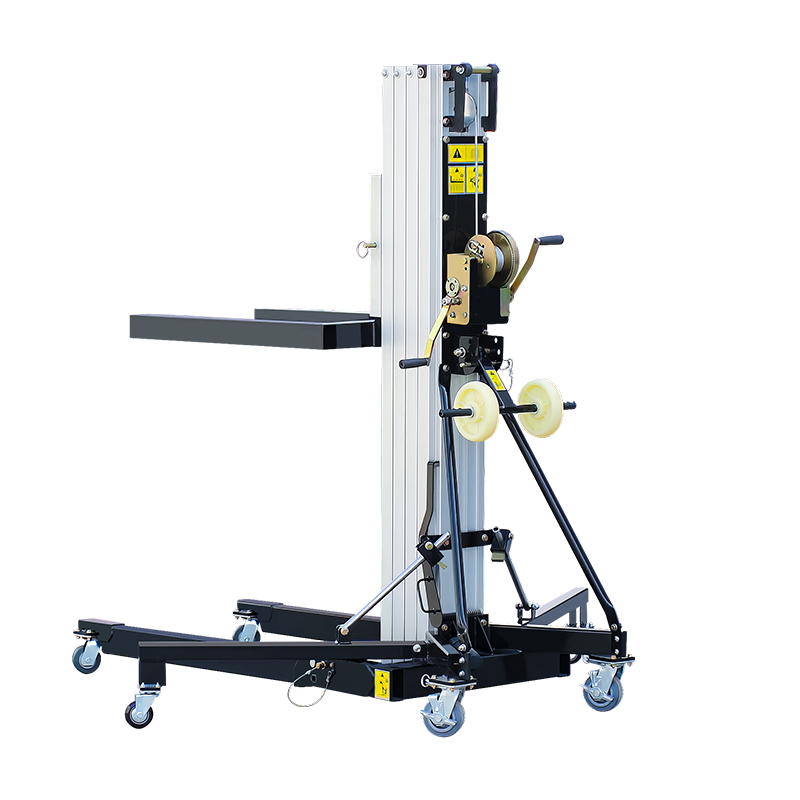
An Industrial Material Lift is a specialized mechanical apparatus engineered exclusively for the elevation of non-personnel loads. Unlike personnel-only platforms or general-purpose forklifts, these devices are optimized for high-density load distribution and vertical stability.
At REES Industries, we define these systems by their ability to provide smooth, controlled vertical travel while maintaining a compact footprint. While a forklift is designed for horizontal transport across expansive warehouse floors, an Industrial Material Lift is typically utilized for precision tasks, such as loading machinery, organizing vertical storage, or transferring parts between mezzanine levels.
Key Operational Differentiators:
| Feature | Industrial Material Lifts | Standard Forklifts |
| Primary Function | Precision vertical elevation | Horizontal transport & stacking |
| Footprint | High-density/Compact | Wide turning radius required |
| Control Interface | Integrated manual/automated controls | Operator-driven cab |
| Operational Setting | Static/Workstation or light-mobile | Warehouse/Logistics transit |
REES Industries has evolved our design processes to ensure our lifts meet the specific technical demands of these environments, ensuring that our products have passed CE certification for safety and reliability in international markets. By prioritizing structural integrity and mechanical precision, we provide the industrial sector with tools that eliminate the instability often found in legacy lifting systems.
Selecting the correct lifting solution depends entirely on your facility’s load requirements, duty cycle, and environment. REES Industries engineers a diverse range of Industrial Material Lifts to address these varying operational needs. By adhering to strict design protocols and utilizing high-grade materials, we ensure that every unit, whether manual or powered, provides the vertical stability essential for high-precision manufacturing.
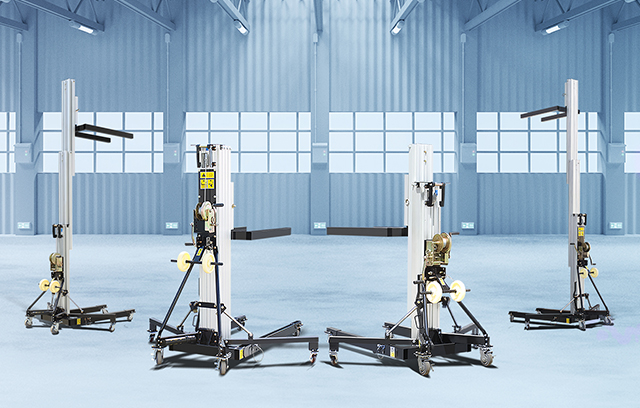
Manual Industrial Material Lifts are the most efficient solution for operations requiring infrequent lifting or those with limited floor space. These units rely on high-efficiency winching systems that allow a single operator to elevate loads safely. Because they do not require external power sources, they are exceptionally portable and can be deployed rapidly across different sections of a production line.
When your manufacturing processes involve consistent, heavy-duty load handling, hydraulic Industrial Material Lifts offer superior performance. By utilizing hydraulic fluid pressure to drive vertical movement, these lifts provide a level of smoothness and reliability that is difficult to match with mechanical systems. REES Industries integrates advanced hydraulic seals and precision-machined cylinders to ensure that these lifts maintain stability even at their maximum rated heights.
For high-frequency lifting tasks, manual effort can lead to operator fatigue and bottlenecks. Electric and battery-powered Industrial Material Lifts automate the vertical travel process, significantly increasing throughput. Our battery-powered units are designed for extended duty cycles, ensuring consistent performance throughout a full shift without the need for constant tethering to power outlets.
In environments where safety and cleanliness are paramount—such as cleanrooms or areas with combustible materials—pneumatic Industrial Material Lifts are the industry standard. These lifts operate on compressed air, eliminating the risks associated with electrical sparking or hydraulic fluid leaks.
Technical Comparison of Lift Categories
| Category | Primary Power Source | Best Application | Stability Profile |
| Manual | Human-Operated Winch | Light-duty, portable tasks | High (Stationary base) |
| Hydraulic | Fluid Pressure | Heavy, consistent manufacturing | Excellent (Precision control) |
| Electric | Battery/AC Power | High-cycle logistics | High (Automated motion) |
| Pneumatic | Compressed Air | Cleanrooms, hazardous zones | Excellent (Spark-free) |
At REES Industries, our production philosophy centers on the technical performance of these systems. Each category is designed to meet the rigorous international standards we uphold, ensuring that the Industrial Material Lift you integrate into your facility is built for durability and long-term operational success in more than 100 countries where our products are currently in use.
Selecting the optimal Industrial Material Lifts is a critical decision that directly impacts operational safety and long-term asset utility. At REES Industries, we emphasize a technical approach to procurement, ensuring that every specification aligns with your facility's unique infrastructure. Our design philosophy, rooted in the implementation of ISO 9001 and ISO 14001 standards, ensures that our equipment not only performs consistently but also integrates seamlessly into highly regulated workspaces.
When evaluating an Industrial Material Lift for your facility, we recommend focusing on the following technical parameters:
Maximum Load Capacity: This is the primary safety threshold. It is essential to calculate the weight of your heaviest payload plus any auxiliary attachments. REES Industries subjects its Industrial Material Lifts to rigorous stress testing to ensure the structural integrity matches the rated capacity.
Vertical Lifting Height: This defines the operational ceiling of the equipment. Beyond just the maximum reach, you must consider the "stowed height" to ensure the lift can pass through doorways and operate effectively under low-clearance areas such as mezzanines or ventilation ducts.
Mobility and Portability: In dynamic production environments, the ability to relocate the lift is paramount. Factors such as wheelbase width, caster material, and total unit weight determine how easily the lift traverses the facility floor.
Versatile Attachment Ecosystem: The utility of your Industrial Material Lift is extended through specialized interfaces. Whether your operations require fixed forks for pallets, boom attachments for hanging components, pipe cradles for cylindrical materials, or customized load platforms, the equipment must support safe, secure attachment mounting.
Technical Evaluation Matrix for Selection
| Criteria | Importance | Impact on Operation |
| Payload Capacity | High | Prevents structural failure and ensures safety compliance. |
| Reach/Height | High | Dictates the maximum vertical storage or positioning capability. |
| Base Stability | Critical | Determines safety during high-altitude load handling. |
| Maneuverability | Medium | Influences the speed of deployment in narrow production aisles. |
| Attachment Flexibility | Medium | Expands the scope of materials the lift can effectively handle. |
At REES Industries, we understand that technical specifications must be matched by manufacturing excellence. Our commitment to CE certification and our extensive export experience to over 100 countries allow us to provide Industrial Material Lifts that meet global performance benchmarks. By analyzing these selection factors closely, your procurement team can ensure that the equipment provided by REES Industries delivers the safety, efficiency, and ROI expected in a modern industrial setting.
When investing in Industrial Material Lifts, the focus should always be on engineering reliability and the ability to withstand intensive usage cycles. At REES Industries, we do not believe in a "one-size-fits-all" approach; instead, we prioritize technical solutions that are tailored to the specific weight profiles and vertical requirements of your production line. As a manufacturer committed to high-standard production in the Feicheng Bianyuan Economic Area, we ensure that our units are built to provide consistent commercial value.
Our procurement strategy centers on high-precision units designed for diverse industrial scenarios. Below is a breakdown of how REES Industries classifies its solutions based on specific functional requirements:
Versatile Compact Lifts: Designed for multi-purpose handling, these units are engineered for environments where space is at a premium. They are ideal for quick, efficient load management in narrow aisles or small-scale assembly zones.
Heavy-Duty Construction Lifts: Engineered for high-load capacity, these models are the workhorses of the manufacturing floor. They feature reinforced structural frames designed specifically for maintenance and heavy material handling.
Utility-Focused Positioning Lifts: These models prioritize ergonomic placement. They are best utilized in workstation integration where components must be held at specific heights for assembly, minimizing operator fatigue and improving precision.
Hydraulic Positioning Tables: These units provide the most stable platform for heavy-duty load positioning. By using advanced hydraulic fluid systems, they allow for incremental height adjustments, making them essential for high-precision manufacturing processes.
Operational Application Matrix
| Unit Type | Load Profile | Optimal Environment | Key Design Focus |
| Compact Series | Light/Moderate | Assembly lines, storage | Mobility & ease of use |
| Heavy-Duty Series | High-Mass | Manufacturing, maintenance | Structural rigidity |
| Utility/Positioning | Moderate | Workstations, integration | Ergonomic precision |
| Hydraulic Series | Heavy/Sensitive | Production precision | Smooth, controlled verticality |
At REES Industries, our equipment undergoes rigorous testing to comply with international health and safety management systems, including ISO 18001 standards. We ensure that the Industrial Material Lifts supplied to our partners worldwide meet the exact technical indicators required for their specific production environments. By choosing a manufacturer that maintains complete control over the production process—from design to final CE certification—you ensure that your procurement strategy is backed by a commitment to supply chain reliability and long-term equipment performance.
Maintaining the operational integrity of your Industrial Material Lifts is essential not only for prolonging equipment lifecycle but for ensuring a secure working environment. At REES Industries, we build our equipment in strict accordance with international safety management standards, including ISO 9001, ISO 14001, and ISO 18001. However, the long-term reliability of any lifting device depends on consistent adherence to rigorous maintenance and safety protocols.
To assist our global partners in maintaining high performance, we recommend the following structured approach to safety and maintenance.
All Industrial Material Lifts must be operated in accordance with local safety regulations and international benchmarks. At REES Industries, all our products have passed CE certification, which signifies that they meet essential health, safety, and environmental requirements for the European market. Operators should be trained to recognize the load capacity limitations of their specific model and understand the critical nature of center-of-gravity management when elevating goods.
Implementing a daily checklist is the most effective way to prevent premature mechanical failure. Before the start of every shift, the following areas of the Industrial Material Lift should be verified:
Structural Integrity: Inspect the frame and mast for any signs of deformation, fatigue, or stress cracks.
Lifting Mechanism: Check the cable or chain tension and ensure that the lifting interface (forks or platforms) is securely locked.
Control Systems: Test the manual winch or power controls to ensure smooth operation without abnormal resistance.
Stability Components: Verify that the locking mechanisms on wheels or outriggers are fully functional and secure.
Hydraulic/Pneumatic Systems (if applicable): Inspect hoses and connections for potential leaks, and confirm fluid levels are within operating parameters.
Regular servicing is required to maintain the high technical performance that REES Industries builds into every unit.
Recommended Maintenance Intervals
| Frequency | Maintenance Task | Purpose |
| Daily | Visual inspection and load test | Ensures immediate operational safety. |
| Monthly | Lubrication of moving parts & cable check | Reduces friction and prevents wire degradation. |
| Quarterly | Hydraulic seal/air filter inspection | Maintains system pressure and prevents contamination. |
| Annually | Structural load testing & calibration | Validates that the lift still meets design specifications. |
By adhering to these protocols, you ensure that the Industrial Material Lifts provided by REES Industries continue to perform at the high level expected in professional manufacturing and logistics environments. Our team in the Feicheng Bianyuan Economic Area remains dedicated to providing technical support and spare parts guidance to ensure that your investment in our lifting solutions provides continuous value throughout the equipment’s service life.
To ensure your team can maximize the potential of their Industrial Material Lifts, REES Industries has compiled this technical FAQ based on years of manufacturing experience and direct feedback from our partners across more than 100 countries.
What are the primary structural differences between a standard material lift and an industrial-grade version?
Industrial-grade Industrial Material Lifts are engineered with higher-grade steel and reinforced masts to withstand continuous duty cycles. Unlike lighter alternatives, our units at REES Industries undergo rigorous testing to meet ISO 9001 and CE certification standards, ensuring they remain stable under maximum rated loads in professional manufacturing settings.
How do I verify the load stability of an Industrial Material Lift when operating at maximum height?
Stability is determined by the lift’s base geometry and the center of gravity of the payload. Always ensure the load is centered on the forks or platform. For units with outriggers, ensure they are fully extended and locked before elevating any load, as this significantly increases the stability footprint.
Can Industrial Material Lifts be customized with proprietary attachments for unique industrial goods?
Yes. REES Industries can assist in configuring attachments such as specialized cradles or extended platforms to accommodate unique material dimensions. We recommend contacting our technical team in the Feicheng Bianyuan Economic Area to discuss specific loading requirements to ensure the custom attachment maintains the integrity of the lift’s load-bearing capacity.
What are the common indicators that a hydraulic Industrial Material Lift requires fluid system maintenance?
Primary indicators include sluggish vertical movement, "drifting" (where the load slowly descends while the lift is stationary), or visible leaks around cylinder seals. If you notice any of these, discontinue use immediately and inspect the hydraulic fluid levels and seal integrity.
How does the duty cycle impact the selection between manual and electric Industrial Material Lifts?
Manual lifts are best for intermittent tasks (e.g., 1–5 lifts per hour). If your process requires high-frequency, continuous lifting (e.g., 10+ cycles per hour), an electric unit is recommended to maintain operator efficiency and prevent mechanical strain.
Are there specific certification standards I should look for when auditing an Industrial Material Lift?
For international trade and safety, always verify that your equipment carries CE certification. REES Industries ensures all our platforms comply with this, confirming they meet essential health, safety, and environmental protection requirements.
How do environmental factors like floor surface quality impact the performance of mobile Industrial Material Lifts?
Mobile Industrial Material Lifts require level, debris-free concrete surfaces to maintain stability. If operating on rough or uneven floors, you may need to de-rate the maximum lifting height or ensure the lift is equipped with heavy-duty industrial casters to prevent tipping risks.
What is the recommended frequency for structural inspections of lifting cables or chains?
A visual inspection should be part of your daily pre-operation checklist. However, a comprehensive professional inspection—including checking for fraying, oxidation, or elongation—should be conducted at least every three months by qualified maintenance personnel.
Can pneumatic Industrial Material Lifts be integrated into automated production lines?
Yes. Because they are powered by compressed air, they are highly suitable for integration into automated environments, particularly where spark-free operation is mandatory. REES Industries provides technical guidance to ensure the air pressure requirements match your facility’s existing pneumatic infrastructure.
How do I determine the precise footprint required for stable operation in narrow-aisle environments?
Measure the base dimensions of the lift and add 20% to account for the clearance required for maneuvering the load. If you are operating in exceptionally narrow aisles, contact our design team; we can review your facility layout and recommend the most compact Industrial Material Lifts from our production line that maintain safety requirements.